
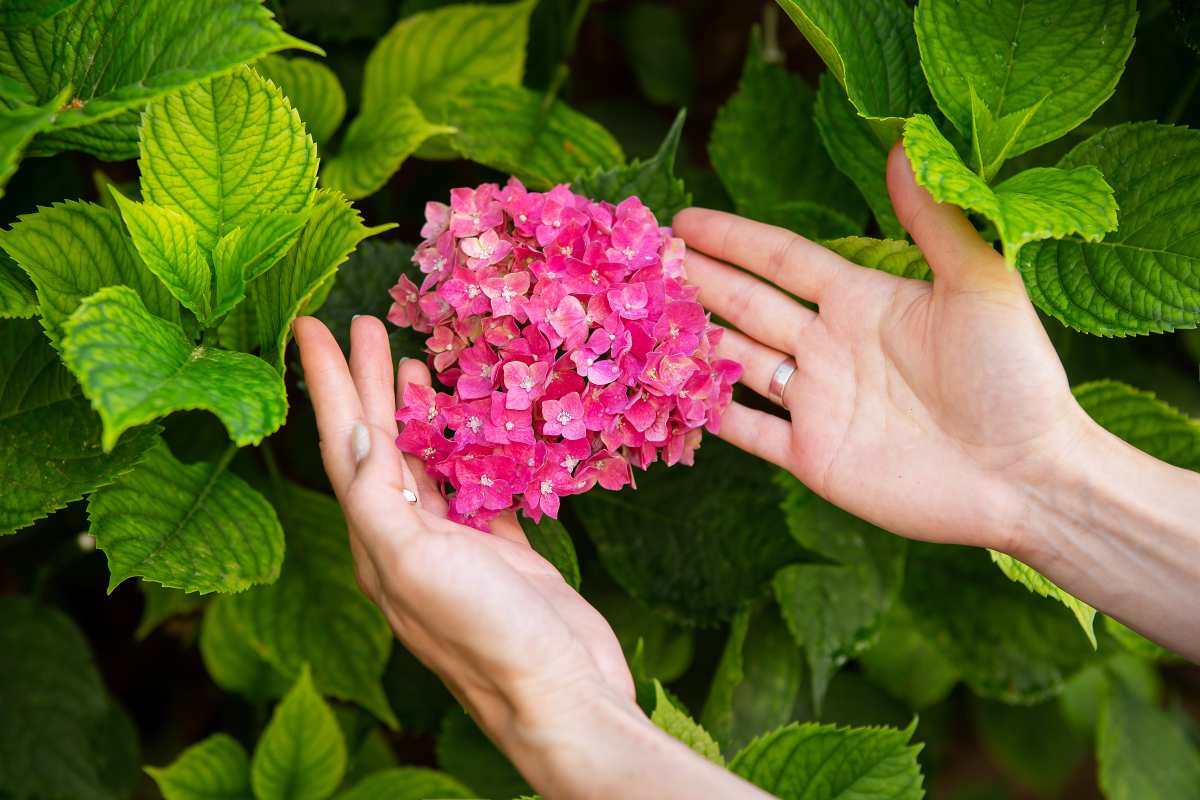
Hydrangea is one of the most loved ornamental plants, thanks to its spectacular and colorful flowers.
However, if you notice that the leaves and flowers start to dry, it is a sign that the plant is not receiving the right care.
In this article, we will look at the main reasons why hydrangea dries up and what measures you can take to save it.
1. Incorrect watering
Lack of water
Hydrangeas need moist but well-drained soil. If the soil is too dry, the leaves and flowers begin to wilt quickly. This happens especially in summer when the temperatures are high.
✅ Solution:
- Water the plant regularly, especially on hot days, but avoid excess water.
- Check the soil moisture with your finger – if the top layer is dry, it’s time to water.
Excess water
Although hydrangea needs water, a constantly waterlogged soil can lead to root rot. The affected roots can no longer absorb nutrients, which causes the leaves to dry out.
✅ Solution:
- Make sure the pot or garden has good drainage.
- Avoid letting the water pool at the base of the plant.
2. Excessive sun exposure
Hydrangeas prefer semi-shaded areas. If the plant is exposed to direct sunlight during the summer, the leaves may burn and dry.
✅ Solution:
- Move the hydrangea to a spot with partial shade, especially at lunchtime.
- If it is planted in the garden, you can protect it with a shade net.
3. Nutrient deficiencies
Inadequate fertilization can cause the leaves to dry out. Hydrangeas need nutrient-rich soil to grow healthily.
✅ Solution:
- Apply a special fertilizer for hydrangeas, preferably a balanced one (N-P-K: 10-10-10 or 20-20-20).
- Fertilize the plant in early spring and during the summer.
4. Problems related to soil
A soil that is too compact, clayey or poor in organic matter can affect the health of the hydrangea.
✅ Solution:
- Use a well-drained soil rich in humus and organic matter.
- If the plant is in a pot, change the substrate every 1-2 years.
5. Pest and disease attack
Pests such as aphids and mites can affect the health of the hydrangea, causing the leaves to dry out. Fungal diseases such as powdery mildew or root rot can also cause problems.
✅ Solution:
- Check the leaves and stems for pests. If you notice small insects, use an organic insecticide or a mixture of soapy water.
- For fungal diseases, apply a suitable fungicide and ensure good air circulation around the plant.
6. Improper cutting
A wrong or too aggressive pruning can weaken the hydrangea and affect flowering.
✅ Solution:
- Prune the hydrangea only at the right time (depending on the variety). Some hydrangeas bloom on old stems, others on new stems.
- Use well-sharpened garden shears to avoid injuring the plant.
If your hydrangea is drying out, review the factors above and adjust your plant care. Proper watering, protection from strong sun, balanced fertilization and pest control are essential to keep your hydrangea healthy and blooming.
Have you had problems with your hydrangea? Tell us in the comments what you tried and if you managed to save it!


Comments are closed.