
Discover whether full bathroom tiling to the ceiling or partial tiling is best for your space. Learn the pros, cons, and expert tips to make the right choice for your style and budget.
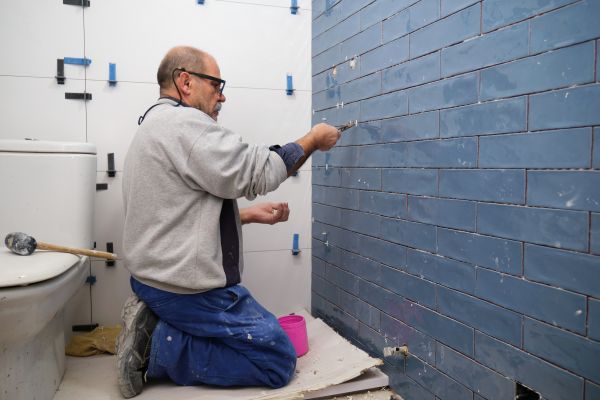
Full Bathroom Tiles vs. Partial Tiling: Which Option Is Right for You?
When it comes time to renovate your bathroom, one of the most common questions is: should you tile all the way to the ceiling or is partial tiling enough? The answer depends on several factors: the size of your bathroom, your desired style, your budget, and even the functionality of your walls.
In this article, we explain when it makes sense to tile all walls from floor to ceiling, when partial tiling is sufficient, and what are the most common myths about bathroom tile application.
Full Wall Tiling to the Ceiling: Pros and Cons
✅ Advantages:
- Maximum moisture protection – Ideal for bathrooms without good ventilation or windows.
- Easy maintenance – Fully tiled walls are simpler to clean.
- Modern and cohesive look – Well-chosen tiles applied all the way up can create an elegant and orderly appearance.
❌ Disadvantages:
- Higher costs – More material and more labor required.
- Rigid appearance in small spaces – Can make a small bathroom appear taller, but also colder or impersonal if not well balanced with décor.
Recommended when: you have a small bathroom without a window, or when you want a minimalist, clean design that’s easy to maintain.
Partial Tiling (typically up to 1.20–1.60 m height)
✅ Advantages:
- Material savings and reduced costs
- Allows decorating the upper wall with washable paint, moisture-resistant wallpaper, or microcement.
- Can create a warmer and more personalized look if you use pleasant colors in the upper section.
❌ Disadvantages:
- More maintenance required in the upper section if not properly protected.
- Risk of moisture or mold in untiled areas if there is no efficient ventilation.
Recommended when: your bathroom is well-ventilated or spacious, and you prefer a warmer or eclectic design.
Mixed Solutions and Modern Approaches
More and more designers are opting for smart combinations:
- Full tiling only in areas exposed to water (shower enclosure, sink, toilet area).
- Decorative tiling in the rest of the bathroom or alternative materials (waterproof paint, PVC panels, microcement, etc.).
This approach allows for creativity, savings, and functionality.
Common Myths About Bathroom Tiles
❌ Myth 1: “If you don’t tile to the ceiling, the walls will deteriorate.”
➡️ FALSE. With good ventilation and quality washable paint designed for bathrooms, untiled walls can hold up very well.
❌ Myth 2: “Tiling to the ceiling makes the bathroom look larger.”
➡️ PARTIALLY TRUE. In small bathrooms, yes – but only if you choose light shades and vertical placement. If you use dark-colored tiles, the effect can be the opposite.
❌ Myth 3: “It’s cheaper to tile all the way up because you paint less.”
➡️ FALSE. Tile material and labor are more expensive than applying washable paint or other finishes.
❌ Myth 4: “All walls must be tiled the same way.”
➡️ FALSE. There’s no universal rule. You can combine tiling in essential areas with other finishes for an original and practical design.
Helpful Tips for Choosing Your Tiling Style
- Assess your bathroom’s humidity level – if you have natural ventilation or an efficient fan, you have more flexibility.
- Consider the room’s height – ceiling height can influence your decision (floor-to-ceiling tiles can enhance verticality).
- Choose tiles based on your home’s style – modern, rustic, classic, industrial, etc.
- Consult a design specialist – they can help you save money and choose the right materials.
There’s no “golden rule” for bathroom tiling. It all comes down to personal style, space functionality, and your available budget. What matters is choosing a solution you’ll love and that will stand the test of time, whether you opt for full or partial tiling.