Master cactus care with our complete guide covering types, lighting, watering, soil, and flowering tips. Learn the secrets to keeping your cacti thriving indoors and outdoors.
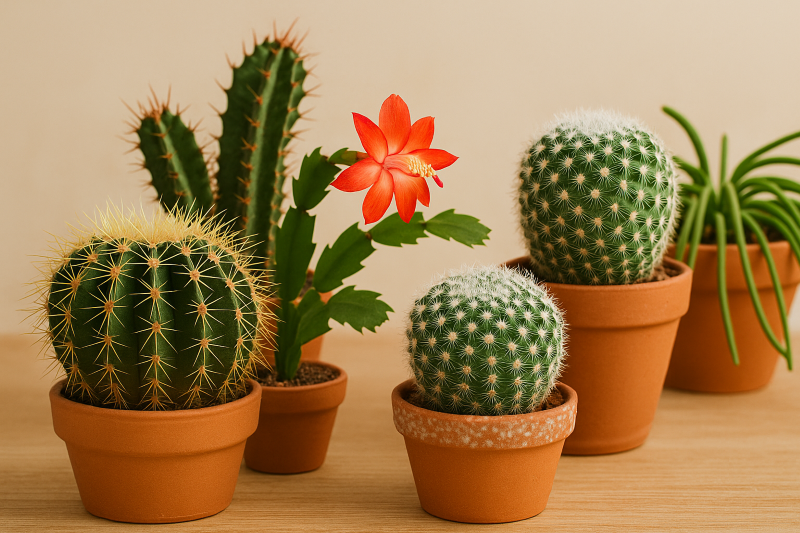
Cactus Care Guide: Growing Healthy & Beautiful Cacti Indoors & Outdoors
Cacti are among the most popular houseplants and garden plants, thanks to their exotic appearance and seemingly easy maintenance. Although they may seem like “indestructible” plants, the truth is they have their own specific needs to thrive. This guide will help you understand which types of cacti work best with your lifestyle and how to provide them with the best growing conditions.
🏠 Types of Cacti Suitable for Indoor and Outdoor Spaces
Cacti fall into two major categories:
- Desert cacti – the classic ones, with spines (e.g.: Echinocactus, Ferocactus, Mammillaria)
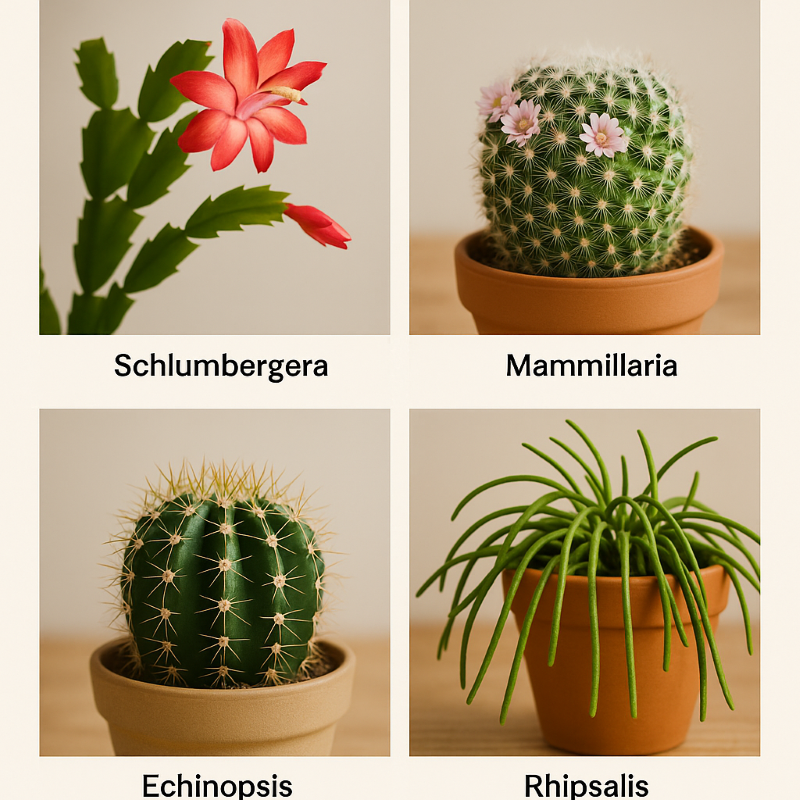
- Tropical forest cacti – the spineless ones, usually epiphytic, such as Schlumbergera (Christmas cactus) or Rhipsalis
📌 For apartments:
- Schlumbergera – loves partial shade and blooms in December
- Mammillaria – forms small cushions with delicate flowers
- Echinopsis – has spectacular, sometimes giant flowers
📌 For gardens (in warmer zones):
- Opuntia (bunny ears cactus) – hardy, decorative
- Cylindropuntia – ideal for desert-style landscaping
☀️ Light – the Essential Element for Growth
Cacti love bright light, but not all tolerate intense direct sun.
- Desert cacti prefer south-facing windows with maximum exposure.
- Tropical cacti need filtered light – perfect for east or west-facing windows.
❗Caution: Abrupt moving from shade to sun can cause stem burns.
💧 Watering – Less Is More
Contrary to expectations, most cacti suffer not from lack of water, but from excess.
Basic watering rules:
- Spring and summer: water once every 10–14 days, only when soil is completely dry.
- Fall and winter: water once a month or even less frequently (dormancy period).
- Use room temperature water, preferably non-calcareous.
💡 If your cactus starts rotting at the base, you’ve likely watered it too much.
🌡️ Temperature and Humidity
- Cacti prefer temperatures between 18–28°C in summer and a cool period in winter (10–15°C) to stimulate flowering.
- They cannot tolerate cold drafts or frost.
- Air humidity should be low, especially for desert species.
📌 Tropical cacti (like Schlumbergera) do well in more humid locations, but without water on the leaves.
🪴 Ideal Soil and Pot
Cacti need a substrate that is well-draining and airy.
Ideal soil mix for cacti:
- 1 part peat
- 1 part coarse sand or perlite
- 1 part garden soil (optional)
The pot:
- Must definitely have drainage holes.
- Don’t use pots that are too large – they retain excess water and encourage root rot.
✂️ Regular Care and Fertilizing
- Clean your cactus of dust with a soft brush.
- Fertilizing: once a month in spring and summer, with special cactus fertilizer (low in nitrogen, rich in potassium and phosphorus).
- Repotting: once every 2–3 years, preferably in spring.
🌸 How to Encourage Your Cactus to Bloom?
Many cacti can bloom if you provide them with:
- A winter rest period at lower temperatures and minimal watering.
- Abundant light in spring.
- A thermal shock (large day/night temperature difference) can stimulate budding.
🌟 Schlumbergera, Echinopsis, and Rebutia are among the most eager to bloom if they have the right conditions.
🌱 Propagating Your Cactus
- By cuttings: cut a piece of cactus, let it dry for a few days, then plant it in dry soil.
- From seeds: requires more time and special conditions (warmth, humidity, indirect light).
❌ Common Mistakes in Cactus Care
- Excessive watering
- Wrong soil, too water-retentive
- Lack of light
- Pots without drainage
- Fertilizing in winter (the cactus is dormant)
✅ Tips for a Happy Cactus
- Rotate the pot periodically for uniform growth.
- Avoid moving your cactus frequently – they don’t like change.
- If it has spines, use thick gloves or kitchen tongs for handling.