
Traveling requires proper preparation, and a well-equipped medical kit is essential for any destination. Discover what to include to ensure your health and safety while exploring the world.
Travel Medical Kit Essentials: What to Pack for Any Destination
Travel is an essential part of life for many of us, offering the chance to explore new places, experience different cultures, and unwind from our daily routines. However, adventures in unfamiliar destinations can bring unexpected challenges, and a well-equipped travel medical kit can make the difference between a pleasant experience and one filled with complications. A medical kit isn't just a simple accessory—it's an essential item that helps us maintain our health and safety while traveling.
Why is it essential?
A travel medical kit is essential because it gives us quick access to necessary products and medications in case of minor accidents or ailments. From cuts and bruises to headaches or allergic reactions, a well-prepared kit can reduce discomfort and prevent health issues from worsening. Additionally, in certain destinations, access to medical services can be limited, making a medical kit even more important.
Types of travel and specific needs
The type of trip significantly influences the contents of your medical kit. For example, a day hike in nature requires different items than a vacation abroad or a business trip. It's important to customize your medical kit based on your destination, trip duration, and planned activities.
What to include in your travel medical kit
Essential wound care products
In any travel medical kit, wound care products are vital. These include:
– Sterile gauze pads: for cleaning and covering cuts or scrapes.
– Bandages: to protect open wounds.
– Disinfectant: such as chlorhexidine solution or alcohol, to prevent infections.
– Blister treatment: which can be especially useful for people hiking or doing intense physical activities.
Basic medications
Basic medications are essential for dealing with common health issues. These include:
– Pain relievers: such as paracetamol or ibuprofen, to ease pain.
– Antihistamines: to treat seasonal allergies or reactions to insect bites.
– Stomach medications: such as antacids or anti-diarrhea medications, essential for digestive problems.
– Cold and flu products: such as syrups or throat lozenges.
Products for allergies and adverse reactions
For those who suffer from allergies, it's important to include in your kit:
– Antihistamines: to control allergy symptoms.
– Epinephrine: for people with severe allergies who may need an auto-injector.
– Creams or ointments for irritation: which can help with rashes or itching.
Personal hygiene items
Personal hygiene is crucial, especially while traveling. Make sure you have:
– Antibacterial soap: to reduce infection risk.
– Wet wipes: useful when running water isn't available.
– Toothpaste and toothbrush: to maintain oral health.
– Deodorant: for daily comfort.
Medical kit for traveling with children
Child-specific products
Traveling with children requires extra attention. Make sure your medical kit contains:
– Fever and pain medications: appropriate for your child's age.
– Sunscreen: with an appropriate protection factor for children's sensitive skin.
– Character-themed bandages: which can make wound care less frightening for little ones.
Special considerations
When traveling with children, it's important to verify that the products in your kit are safe and age-appropriate. It's also a good idea to discuss additional recommendations with your pediatrician.
Medical kit for remote area travel
Additional medications and equipment
If you're planning a trip to remote areas, it's important to include additional items, such as:
– Malaria medications: if traveling to areas where this disease is prevalent.
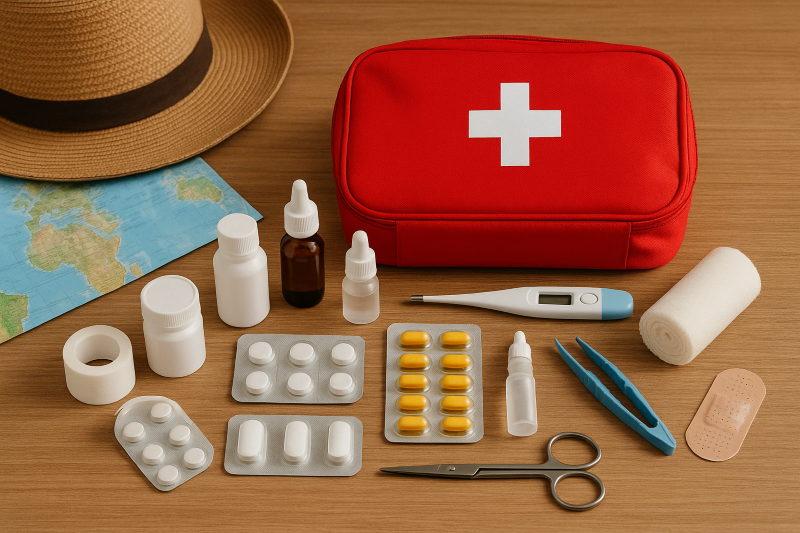
– First aid kit: containing tools like scissors, tweezers, and a thermometer.
– Water filtration equipment: to prevent digestive problems.
Health precautions
Before traveling, it's recommended to check necessary vaccinations for your destination and consider travel medical insurance. Additionally, learning about health risks in the area is essential.
Organizing your travel medical kit
Container types and organization
To quickly access products from your medical kit, it's important to organize it efficiently. Use clear, labeled containers that allow for quick identification of contents. It's also good to have a compact, easy-to-transport kit.
Periodic content checks
It's essential to periodically check your medical kit's contents, ensuring products haven't expired and you have adequate supplies. This check should be part of your preparation for each trip.
Final recommendations
A well-equipped travel medical kit is essential to ensure a pleasant and safe travel experience. Whether you're traveling alone, with family, or to remote areas, make sure you have all necessary products within reach. Careful planning and efficient organization can make the difference between a successful vacation and one marred by complications.