
Why is my basil dying? Learn the most common causes, from watering mistakes to poor light, and how to revive basil before it’s too late.
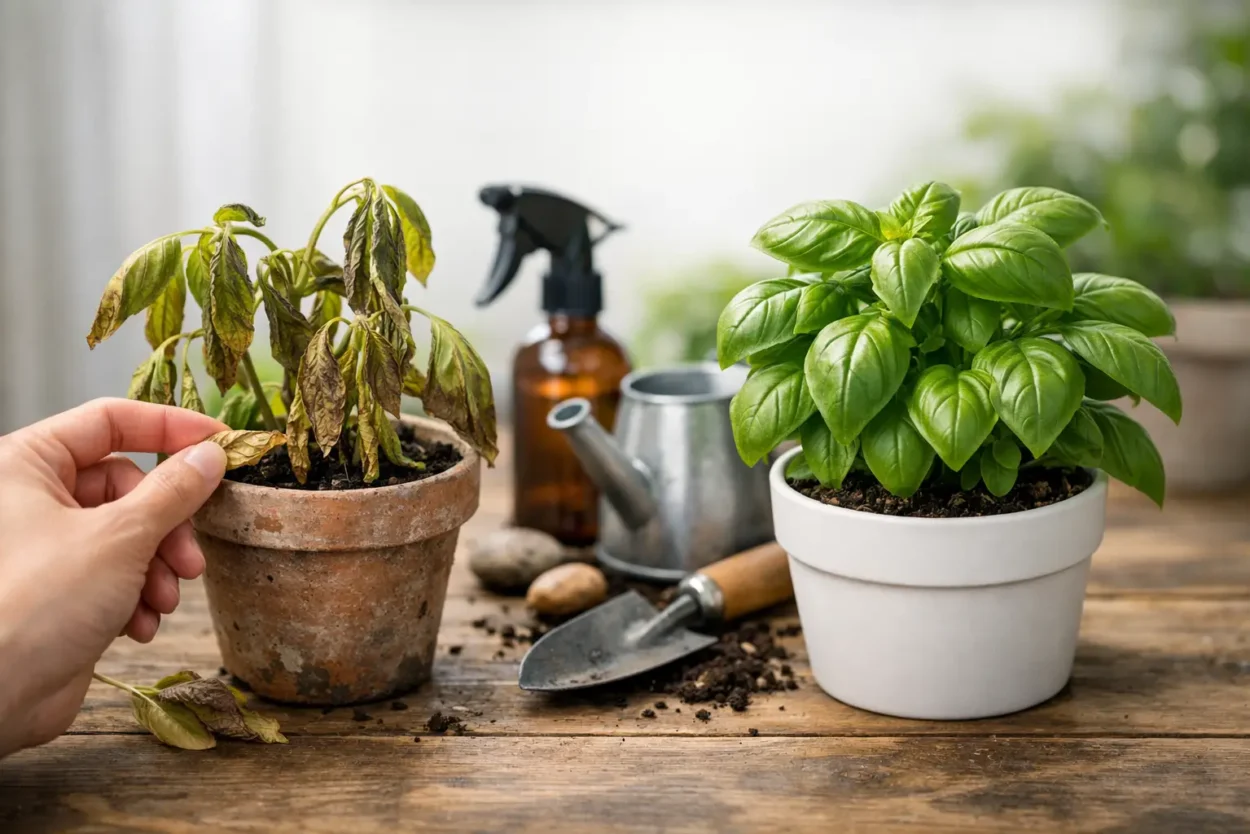
Why Is My Basil Dying? Common Fixes
You bring home a lush basil plant, set it on the windowsill, maybe even picture future pasta nights – and then the leaves start drooping, yellowing, or turning black at the edges. If you’re asking, “why is my basil dying,” the good news is that basil usually gives clear signals before it gives up completely.
Basil can be a little dramatic, but it’s not hard to read once you know what to look for. Most problems come down to a short list: too much water, not enough light, sudden temperature stress, crowded roots, or a pest issue that went unnoticed. The trick is figuring out which one is happening in your space, because the right fix depends on the cause.
Why is my basil dying? Start with the leaves
Before you change anything, look closely at the plant. Basil leaves tell you a lot.
If the whole plant is limp but the soil feels soggy, overwatering is the most likely issue. If the leaves are drooping and the soil feels dry several inches down, it probably needs water. Yellow leaves usually point to too much moisture, poor drainage, or aging lower growth. Brown or black spots can mean cold damage, fungal trouble, or inconsistent watering. Pale, stretched-out growth usually means the plant wants more sun.
This is where many people get tripped up. A wilted basil plant can look thirsty and overwatered at the same time. That’s because roots damaged by excess water can’t take up moisture properly, so the plant collapses even though the pot is wet.
The most common reason basil dies indoors
For indoor basil, the biggest problem is usually water sitting around the roots. Basil likes consistent moisture, but it does not like being waterlogged. If it’s in a decorative pot without drainage, or if the saucer stays full, the roots can start to rot fast.
Healthy basil roots should be light in color and firm. Rotten roots look brown or gray and feel mushy. If that’s what you find, trim away the damaged roots, move the plant into fresh well-draining potting mix, and use a container with drainage holes. Then hold back on watering until the top inch of soil feels dry.
There’s a trade-off here. Letting basil dry out too often also stresses it, especially in a small pot. The goal is not dry soil all the time. The goal is evenly moist soil that can breathe.
Light might be the issue more than water
A lot of grocery-store basil starts strong and then fades because it simply doesn’t get enough direct light at home. Basil is a sun-loving herb. It generally wants six to eight hours of bright light a day, and a dim kitchen corner usually won’t cut it.
If your plant is leaning hard toward the window, growing long weak stems, or producing small leaves, low light is a likely factor. Move it to your brightest window, ideally one with strong sun for several hours. If your home doesn’t get enough natural light, a simple grow light can make a big difference.
Light also affects watering. Basil in full sun dries faster and uses more water. Basil in low light stays wetter longer, which raises the risk of root problems. That’s why the exact same watering routine can work in one home and fail in another.
Temperature stress can ruin basil surprisingly fast
Basil loves warmth and hates cold. If it sits near an air conditioner, drafty window, or chilly door, the leaves can darken, droop, or develop damaged patches almost overnight. Even a brief cold snap can shock it.
This is especially common with basil bought from the grocery store and then carried outside on a cool day or left in the car too long. If the leaves look blackened or soft after exposure to cold, those damaged parts won’t recover. Trim them off and keep the plant in a warm, stable spot.
Try to keep basil away from temperatures below about 50 degrees Fahrenheit. It will tolerate heat better than cold, as long as it has enough water.
Why grocery-store basil often declines so quickly
If your basil came from the supermarket, the plant may not actually be one plant. It’s often a cluster of many seedlings packed tightly into one small pot so it looks full and attractive on the shelf.
That crowded setup works for short-term display, but not always for long-term health. The roots compete for space, water, and nutrients, and airflow gets worse around the stems. After a week or two, the whole pot can start looking tired.
If that’s your situation, divide the clump into smaller sections and replant them into separate pots. It feels a little intimidating the first time, but basil usually handles it well if you do it gently and water it afterward. You may lose a few stems, but the remaining plants often bounce back better once they have room.
Pests and disease can look like care mistakes
Sometimes the answer to “why is my basil dying” isn’t your watering schedule at all. Basil can attract aphids, spider mites, whiteflies, and fungus gnats, especially indoors.
Aphids usually cluster on soft new growth and leave behind sticky residue. Spider mites are tiny and easy to miss, but fine webbing and speckled leaves are clues. Fungus gnats are more annoying than deadly, but they often signal soil that stays too wet.
Disease is another possibility, especially if leaves develop spots, fuzzy growth, or sudden stem collapse. Downy mildew is a known basil problem and can cause yellowing between veins with grayish growth underneath the leaves. If disease is spreading fast, removing badly affected growth may help, but sometimes replacing the plant is the cleaner option.
For mild pest issues, rinsing the plant and improving airflow can help. If the problem is heavier, insecticidal soap may be useful, but avoid overdoing any treatment on a stressed plant.
How to revive basil that looks like it’s fading
The best rescue plan starts with one honest check: is the plant too wet, too dry, too dark, too cold, or too crowded?
Touch the soil first. If it’s soaked, stop watering and make sure excess moisture can drain. If it’s bone dry and pulling away from the pot, water thoroughly until it runs out the bottom, then let the excess drain away. Next, check light. If the plant is in weak light, move it somewhere brighter.
After that, prune strategically. Remove yellow, black, or mushy leaves so the plant can put energy into healthy growth. If the stems are long and leggy, pinch just above a leaf node to encourage branching. Basil responds well to regular pinching, and it usually gets fuller because of it.
Don’t rush to fertilize a struggling basil plant right away. If the roots are stressed, fertilizer can make things worse. Once the plant stabilizes and starts putting out new growth, a light feeding can help, but recovery comes first.
A better basil care routine going forward
Basil does best when its routine is simple and consistent. Give it bright light, warm temperatures, and soil that stays lightly moist but never swampy. Water when the top inch feels dry, not just because the calendar says it’s time.
Use a pot with drainage and a basic well-draining potting mix. If it’s growing fast, harvest it often. Pinching the top growth helps it stay bushy and delays flowering, which can make the leaves taste less tender.
It also helps to rotate the pot every few days if it’s leaning toward the sun. And if you’re growing basil indoors year-round, be realistic about seasonal changes. A sunny summer windowsill and a weak winter one are not the same environment, so your care routine may need to shift.
When it’s time to start over
Sometimes basil is too far gone, especially if root rot has spread through most of the plant or disease has taken over. That doesn’t mean you failed. Basil is fast-growing, short-lived, and more sensitive than some other herbs.
If a few stems are still healthy, you can try rooting cuttings in water and starting fresh that way. It’s often easier than nursing a badly damaged root system back to life. And if you buy another plant, repotting it early, giving it real sun, and avoiding soggy soil will put you miles ahead.
Basil can be fussy, but it’s also forgiving when you catch the problem early. A little detective work now can turn that sad pot on your windowsill back into the fresh, fragrant plant you wanted in the first place.


Comments are closed.