
Raised garden bed vs containers: compare cost, space, watering, yields, and upkeep so you can choose the best setup for your home garden.
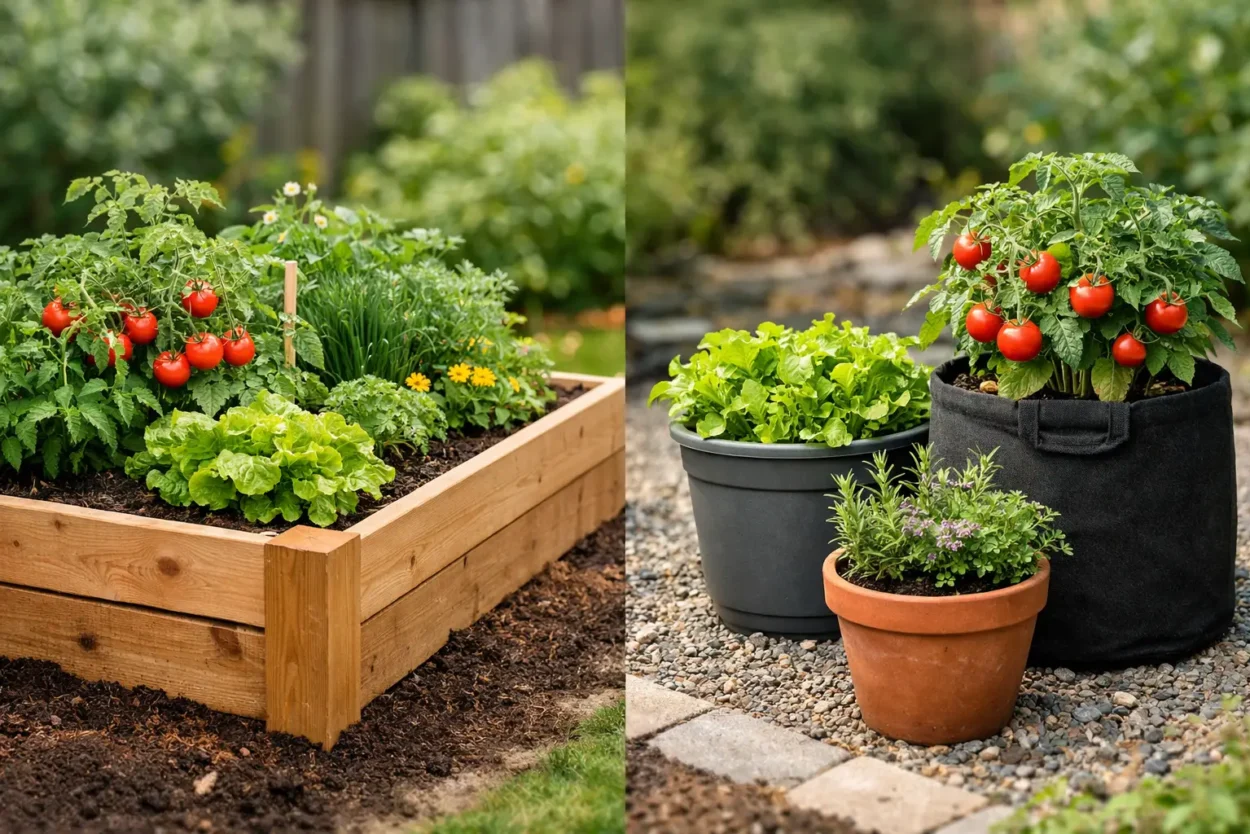
Raised Garden Bed vs Containers: Which Wins?
If you are stuck on raised garden bed vs containers, the real question is less about which one is better and more about how you want gardening to fit into your life. A balcony gardener with two hours on Sunday needs a different setup than someone turning part of the backyard into a mini vegetable patch. Both options can grow beautiful, productive plants, but they solve different problems.
For most beginners, this choice comes down to space, budget, mobility, and how much maintenance feels realistic. Raised beds usually make more sense if you want to grow a bigger mix of vegetables and have a yard or patio with room to spare. Containers are often the easier entry point if you are short on space, renting, or want a setup that stays flexible.
Raised garden bed vs containers at a glance
Raised garden beds are open-bottom growing areas built above ground and filled with soil. Containers are individual pots, planters, grow bags, window boxes, or tubs that hold soil in a fully enclosed space. That difference sounds small, but it affects nearly everything, from root growth to watering frequency.
Raised beds usually offer more soil volume, which helps regulate moisture and temperature. Plants often have more room to spread, and that can translate to stronger growth for crops like tomatoes, peppers, cucumbers, zucchini, and leafy greens. Containers, on the other hand, give you more control over placement. You can move them to chase the sun, protect plants from rough weather, or rearrange your setup when you want the patio to feel less like a farm.
If you want the shortest answer, here it is: raised beds tend to win for volume and long-term growing, while containers win for convenience and flexibility.
When a raised garden bed makes more sense
A raised bed is usually the better pick if you have a yard and want to grow more than a few herbs or decorative plants. It creates a dedicated growing zone that feels organized and intentional, which is a big plus if you like a tidy outdoor space.
The biggest advantage is root room. Since raised beds hold a lot more soil than most pots, plants are less likely to dry out fast or become root-bound. That means fewer dramatic midday wilt situations in summer and a little more forgiveness if you miss a watering session. Larger soil volume also supports companion planting and succession planting, so you can grow a fuller mix in one place.
Raised beds can also be easier on your body. If the bed is built high enough, you do less bending and kneeling. That matters more than people think once the novelty of gardening wears off and the routine part begins.
There are trade-offs, though. Raised beds cost more upfront if you need lumber, soil, and hardware. They are also permanent enough that bad placement becomes annoying fast. Put one in a spot that only gets four hours of sun, and you may spend the whole season wishing you had measured better.
When containers are the better choice
Containers shine when your space is limited or temporary. If you live in an apartment, condo, or rental, containers make gardening possible without major commitment. They also work well if you are still figuring out how much gardening you actually enjoy.
That flexibility is the whole appeal. You can start with three pots of basil, mint, and cherry tomatoes and call it a garden. If it goes well, add more next season. If it does not, you have not spent a lot of money or turned part of the yard into a project.
Containers are also ideal for controlling specific plant needs. One pot can hold moisture-loving basil, while another gives rosemary the drier soil it prefers. This separation makes it easier for beginners to avoid overwatering one plant while underwatering another.
The downside is that containers are less forgiving. Soil dries out faster, especially in hot weather or on sunny patios where heat bounces off concrete. Many vegetables outgrow small pots quickly, and once roots hit the walls of the container, growth can stall. If you want big yields, container size matters more than most people expect.
Cost, upkeep, and the reality of daily care
Budget matters, but so does maintenance. A raised bed usually asks for more money at the start and less hands-on stress once it is set up well. Containers often seem cheaper because one pot is inexpensive, but costs add up fast when you buy quality planters, saucers, potting mix, and supports for larger plants.
Watering is where the daily difference shows up most clearly. Containers often need water more frequently, sometimes every day during peak summer. Raised beds still need consistent care, but they usually hold moisture longer because of their larger soil mass. If you travel often, forget to water, or just do not want another daily task, that can tip the decision.
Fertilizing is a little different too. Container plants use up nutrients faster and rely entirely on what is in the potting mix. Raised beds also need feeding, especially for heavy feeders like tomatoes, but the bigger soil system tends to stay more stable.
From a style perspective, containers can be easier to make attractive fast. A few coordinated pots can instantly upgrade a balcony or front porch. Raised beds look polished too, but they usually read as a bigger garden project than a decor choice.
Which grows vegetables better?
If your goal is maximum harvest, raised beds usually come out ahead. They support bigger root systems, better spacing, and a wider range of crops. You can grow lettuce in rows, tuck in carrots between slower crops, and dedicate corners to herbs. It feels closer to a traditional vegetable garden, just cleaner and easier to manage.
That said, containers can still be highly productive when matched with the right plants. Herbs, lettuce, spinach, radishes, green onions, strawberries, and compact tomato varieties often do very well in pots. Dwarf peppers and patio eggplants can also thrive.
The mistake many beginners make is trying to grow large, thirsty, heavy-feeding plants in containers that are too small. A tomato in a tiny decorative pot will struggle no matter how good your intentions are. If you go the container route, larger pots usually lead to happier plants and less work.
The best option for small spaces
For balconies, small patios, and urban homes, containers are almost always the more practical answer. You can use vertical stands, railing planters, and grouped pots to create a garden without giving up your entire outdoor area. You can also bring plants indoors temporarily if weather gets rough.
Raised beds can work in small yards, but they need enough space to justify their footprint. If a raised bed takes over the only sunny corner where you also wanted seating, it may not feel worth it. In tight spaces, versatility usually wins.
Raised garden bed vs containers for beginners
For absolute beginners, containers often feel less intimidating because they let you start small. One or two successful pots can build confidence quickly. You learn how sun exposure, watering, and plant growth work without managing a whole bed.
But there is another side to that. Containers require more frequent attention, which can actually make them harder for people with busy schedules. A raised bed can be the easier beginner option if you have the space and want a setup that is more stable week to week.
A good rule of thumb is this: choose containers if you are testing the waters, and choose a raised bed if you already know you want a real vegetable-growing habit.
So which one should you choose?
Choose a raised bed if you have outdoor space, want better yields, and like the idea of a dedicated garden area that pays off over time. It is often the stronger long-term investment for homegrown vegetables.
Choose containers if you need flexibility, have limited room, or want a low-commitment way to start gardening. They are especially useful for renters, apartment dwellers, and anyone who prefers a simpler setup.
Of course, the best answer may be both. A raised bed for vegetables and a few containers for herbs, flowers, or plants with specific needs is often the sweet spot. That mix gives you structure without losing flexibility.
The easiest garden to keep is the one that fits your actual routine, not your fantasy version of it. Pick the setup you will enjoy returning to, and your plants will have a much better chance of thriving.