
Wondering what to wear on safari? This practical guide covers the best clothes, shoes, layers, and colors for comfort, sun, dust, and game drives.
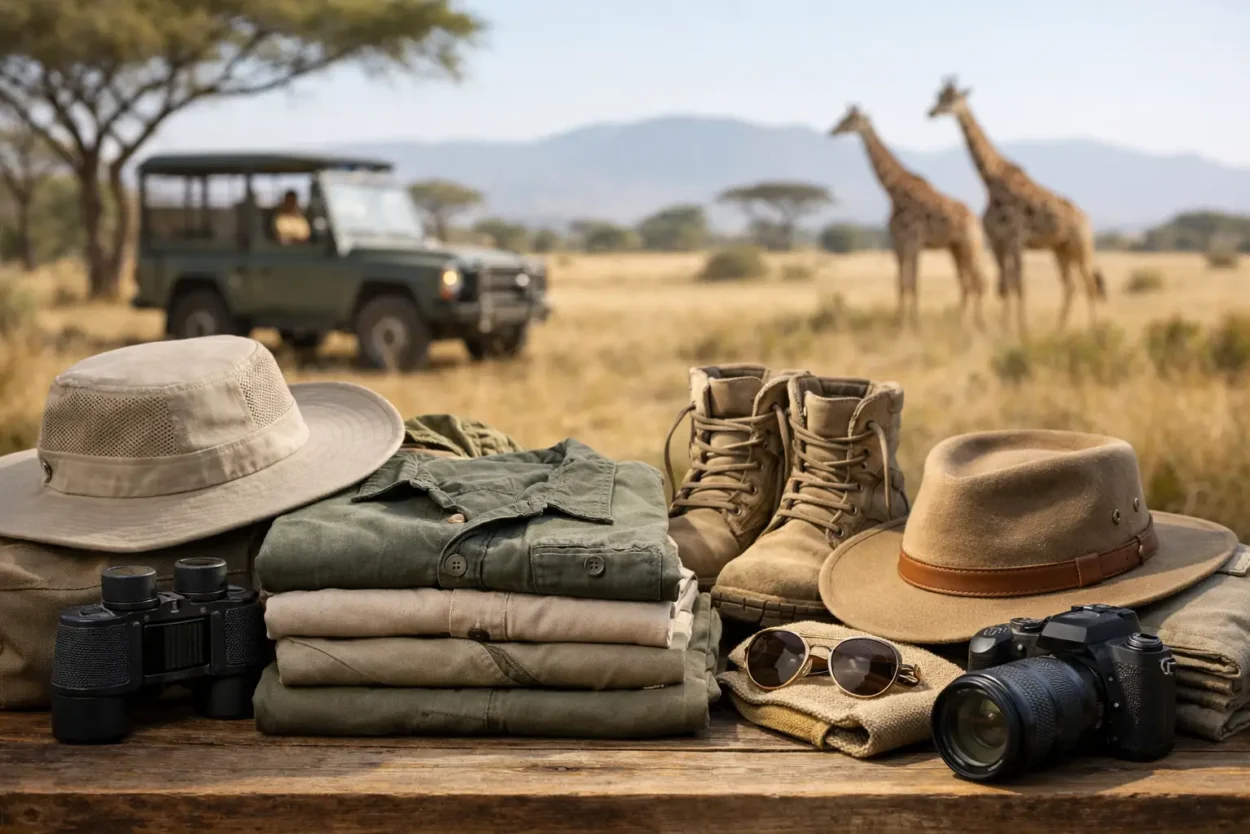
What to Wear on Safari Without Overpacking
That cute linen set you’d wear to brunch can look perfect in a packing cube and feel completely wrong by your second game drive. If you’re figuring out what to wear on safari, the goal is not to look overly styled or ultra-technical. It’s to stay comfortable through early morning chill, midday sun, bumpy rides, dust, and long stretches outdoors while still feeling put together in photos.
Safari style is more practical than glamorous, but it does not have to be boring. The best outfits are breathable, lightweight, and easy to layer. You want pieces that can handle temperature swings, neutral enough to blend into the landscape, and comfortable enough to wear for hours at a time.
What to wear on safari really depends on the trip
Not every safari looks the same, and your packing list should reflect that. A luxury lodge safari with short drives and laundry service calls for less gear than a mobile camping safari where space is tight and dust gets into everything. Season matters too. Mornings can be surprisingly cold in some safari regions, even when afternoons are hot.
That means there is no single perfect outfit. Instead, build around a few dependable basics that work together. Think light layers, soft neutral colors, and shoes you can actually walk in.
Start with lightweight, breathable clothing
For most safari days, comfort starts with fabric. Cotton, linen blends, and moisture-wicking materials tend to work best. You want clothes that breathe well and dry fairly quickly if you wash something in the sink or get caught in a brief shower.
Long-sleeve shirts are often more useful than tank tops. They offer sun protection, help reduce bug exposure, and can feel cooler than you’d expect when the fabric is light. A relaxed button-down shirt is one of the smartest things to pack because it works over a tee, under a jacket, or on its own.
For bottoms, lightweight pants are usually the best call. They protect your legs from sun, brush, and bugs better than shorts. If you run hot, look for loose joggers, travel pants, or breathable utility pants rather than heavy hiking styles. Shorts can still work in camp or on especially hot days, but they’re less versatile.
The best colors for safari outfits
When choosing what to wear on safari, color matters more than trends. Neutral tones such as khaki, olive, tan, beige, taupe, and soft brown are popular for a reason. They hide dust better, feel appropriate for the setting, and are usually recommended over bright or high-contrast shades.
White looks fresh for about five minutes on a dusty drive, then starts to show every mark. Black can attract heat and tends to show dust too. Very bright colors are not always ideal in wildlife settings, and blue or dark navy may be discouraged in some areas where tsetse flies are a concern.
You do not need to dress like a movie extra in head-to-toe beige. A soft green shirt, tan pants, and a cream layer is more than enough. The point is to stay understated and practical, not costume-like.
Layers matter more than people expect
One of the biggest safari packing mistakes is planning only for heat. Early game drives often start before sunrise, and open vehicles can feel cold even in warmer months. Later in the day, the temperature may climb quickly.
A simple layering system works best. Start with a breathable base such as a tee or light long-sleeve top. Add a light fleece, sweatshirt, or zip-up layer for the morning. Bring a packable jacket if your itinerary includes cooler regions or winter travel in southern Africa.
This is where versatility wins. Instead of packing bulky outfits for every possible forecast, bring a few pieces you can combine easily. A neutral overshirt, a thin sweater, and a lightweight jacket can cover a wide range of conditions without taking over your suitcase.
Shoes should be comfortable, not overly rugged
You usually do not need heavy hiking boots for a standard safari, especially if most of your time will be spent in a vehicle or at a lodge. For many travelers, comfortable sneakers, trail shoes, or sturdy walking shoes are enough. The best pair is one you have already worn in.
If your trip includes bush walks or uneven terrain, closed-toe shoes are the safer option. Sandals can be nice around camp, by the pool, or in your room, but they are not ideal for every activity. A two-shoe strategy often works well: one pair of comfortable closed-toe shoes and one easy slip-on or sandal for downtime.
Socks deserve a quick mention too. Lightweight socks that breathe well can make long mornings much more comfortable, especially if dust and cooler air are part of the mix.
Don’t forget sun and dust protection
Safari packing is not just about your main outfit. Accessories can make a bigger difference than people expect. A wide-brim hat or baseball cap helps with intense sun, and sunglasses are essential during long drives. If you tend to burn easily, these are not optional extras.
A lightweight scarf or buff is handy for dust, wind, and chilly mornings. It takes almost no space and can make open-vehicle drives much more comfortable. If you wear prescription glasses, consider bringing a backup pair or a case that keeps them protected from dust.
A small crossbody bag, belt bag, or daypack can also be useful for sunscreen, lip balm, tissues, a phone, and binoculars. Keep it simple and easy to carry.
What women can wear on safari
For women, safari outfits work best when they balance comfort, coverage, and easy movement. A breathable button-down shirt with lightweight pants is a classic choice for good reason, but it is not the only option. A midi shirt dress in a neutral shade can work beautifully around the lodge or for relaxed drives, especially when paired with sneakers or ankle boots.
Leggings can be comfortable for travel days or cool mornings, but thinner styles may attract dust and are not always the most practical in strong sun. Loose, breathable pants are usually easier to wear for a full day. If you like a more polished look, focus on clean basics in soft, earthy colors rather than trying to create fashion-first outfits.
What men can wear on safari
For men, the formula is straightforward: breathable shirt, lightweight pants or shorts, and one solid layer for the morning. Collared shirts are a smart pick because they offer a bit more sun protection around the neck and can look slightly more put together at camp.
Cargo pants are fine if you like them, but they are not a must. Any lightweight, comfortable pant with enough movement will do the job. The same goes for performance fabrics. Useful, yes. Mandatory, no.
What not to wear on safari
A few items tend to cause regret. Very tight clothing can feel restrictive on long drives. Heavy denim is often too hot, too stiff, and slow to dry. Anything dry-clean only or overly delicate is more trouble than it’s worth.
It’s also smart to skip noisy fabrics if you’ll be doing walks, along with brand-new shoes that have not been broken in. Flashy jewelry is unnecessary, and expensive pieces are better left at home. Safari dressing is one of those rare times when low-maintenance really is the stylish choice.
A simple safari capsule wardrobe
If you want to pack light, think in outfit repeats rather than one outfit per day. Two or three tops, two bottoms, one warmer layer, one lightweight jacket, sleepwear, underwear, a hat, and two pairs of shoes is often enough for several days, especially if laundry is available.
This kind of packing makes getting dressed easier too. Everything works together, dust is less of a problem when colors coordinate, and you won’t waste luggage space on pieces you wear once.
The sweet spot is feeling prepared without turning your suitcase into a gear closet. Safari style is about ease, not excess. Pick clothes that keep you cool, covered, and comfortable, and the rest takes care of itself when the landscape does the hard work.