
Learn how to grow rosemary in pots or garden beds with easy tips for sun, soil, watering, pruning, and winter care for a fragrant, healthy plant at home.
How to Grow Rosemary at Home and Keep It Thriving
Rosemary has a way of making a home feel instantly more inviting. Brush past its needles on the patio, snip a sprig for roasted potatoes, or add it to a simple olive-oil marinade. Learning how to grow rosemary is refreshingly straightforward once you understand one key thing: this Mediterranean herb prefers dry, sunny conditions far more than constant attention.
Whether you have a sunny kitchen window, a balcony planter, or room in a backyard bed, rosemary can become one of the most useful and attractive plants you grow. Its evergreen color, pine-like fragrance, and delicate blue flowers make it practical as well as pretty.
How to Grow Rosemary Successfully
Start with a healthy rosemary plant from a garden center if you want the easiest path to a full, harvest-ready plant. Rosemary can be started from seed, but germination is often slow and uneven. Cuttings are another good option, especially if you already have access to a mature plant, but a nursery plant gives beginners a reliable head start.
The secret is matching rosemary’s natural preferences. It wants plenty of direct sunlight, soil that drains quickly, and a watering routine that allows the roots to dry a little between drinks. Overwatering, not underwatering, is the reason many rosemary plants struggle.
Pick a spot with full sun
Rosemary grows best with at least six to eight hours of direct sunlight each day. Outdoors, choose a spot that gets strong afternoon light and does not stay wet after rain. A raised bed, sunny border, or container near a south- or west-facing wall can work especially well.
Indoors, place rosemary in the brightest window available, ideally one that faces south. Window light can be weaker than it looks, particularly in winter. If your plant becomes thin, pale, or stretched toward the glass, it may need a grow light rather than more fertilizer.
Use fast-draining soil
Heavy, moisture-holding soil is not rosemary’s friend. For containers, use a quality potting mix amended with perlite, pumice, or coarse sand to improve drainage. The soil should feel light and loose, not dense and muddy after watering.
In garden beds, improve compacted clay soil with compost and gritty material before planting. If your yard stays soggy, growing rosemary in a pot or raised bed is usually the smarter choice. A beautiful planter is more than a style decision here – it gives you control over the plant’s root conditions.
Choose the right pot
A pot with drainage holes is nonnegotiable. Decorative containers without holes can trap water around the roots and cause rot surprisingly quickly. Choose a container that is a few inches wider than the root ball, rather than a dramatically oversized pot that stays wet for too long.
Terra-cotta is a great material for rosemary because it allows moisture to evaporate through the sides. Plastic and glazed ceramic pots can work too, but you will need to be a little more careful about watering. For a mature plant, a container 12 to 18 inches wide provides enough room for healthy roots and steady growth.
Water Rosemary Without Overdoing It
Water deeply when the top one to two inches of soil feel dry. Then let excess water run fully out of the pot. Rather than watering on a strict schedule, check the soil with your finger first. A plant in a hot outdoor container may need water twice a week in summer, while an indoor plant in winter may need it only every 10 to 14 days.
Rosemary often gives clear clues when something is off. Yellowing lower leaves, soft stems, and a musty smell near the soil usually point to too much moisture. Dry, brittle needles and drooping tips may mean the plant has gone too long without water. The goal is lightly dry soil, not bone-dry soil for weeks at a time.
Humidity can also be a problem indoors. Rosemary prefers moving air and relatively dry conditions, so avoid crowding it tightly among moisture-loving houseplants. Good airflow helps prevent mildew and keeps the foliage healthy.
Planting Rosemary in the Ground
In much of the United States, rosemary grows as a hardy evergreen shrub in warm climates and as a tender perennial in colder ones. It is generally hardy in USDA Zones 8 through 10, though some varieties can handle slightly cooler conditions with protection.
Plant rosemary outdoors after the risk of hard frost has passed. Dig a hole about as deep as the nursery pot and slightly wider, then set the plant at the same depth it was growing before. Firm the soil gently and water it in once. After that, let the soil begin to dry before watering again.
Give each plant room to spread. Depending on the variety, rosemary can grow two to four feet tall and wide. Proper spacing also improves airflow, which reduces the chance of fungal issues after humid weather.
If you live in a cold-winter area, containers are often the easiest option. You can enjoy rosemary outdoors from spring through fall, then move it into a bright indoor spot before nighttime temperatures drop close to freezing.
Feed and Prune for a Fuller Plant
Rosemary is not a heavy feeder. In fact, too much fertilizer can produce fast, soft growth with less fragrance and flavor. A light application of balanced, slow-release fertilizer in spring is usually enough for plants in containers. Garden-grown rosemary may need little or no fertilizer if the soil was amended with compost at planting time.
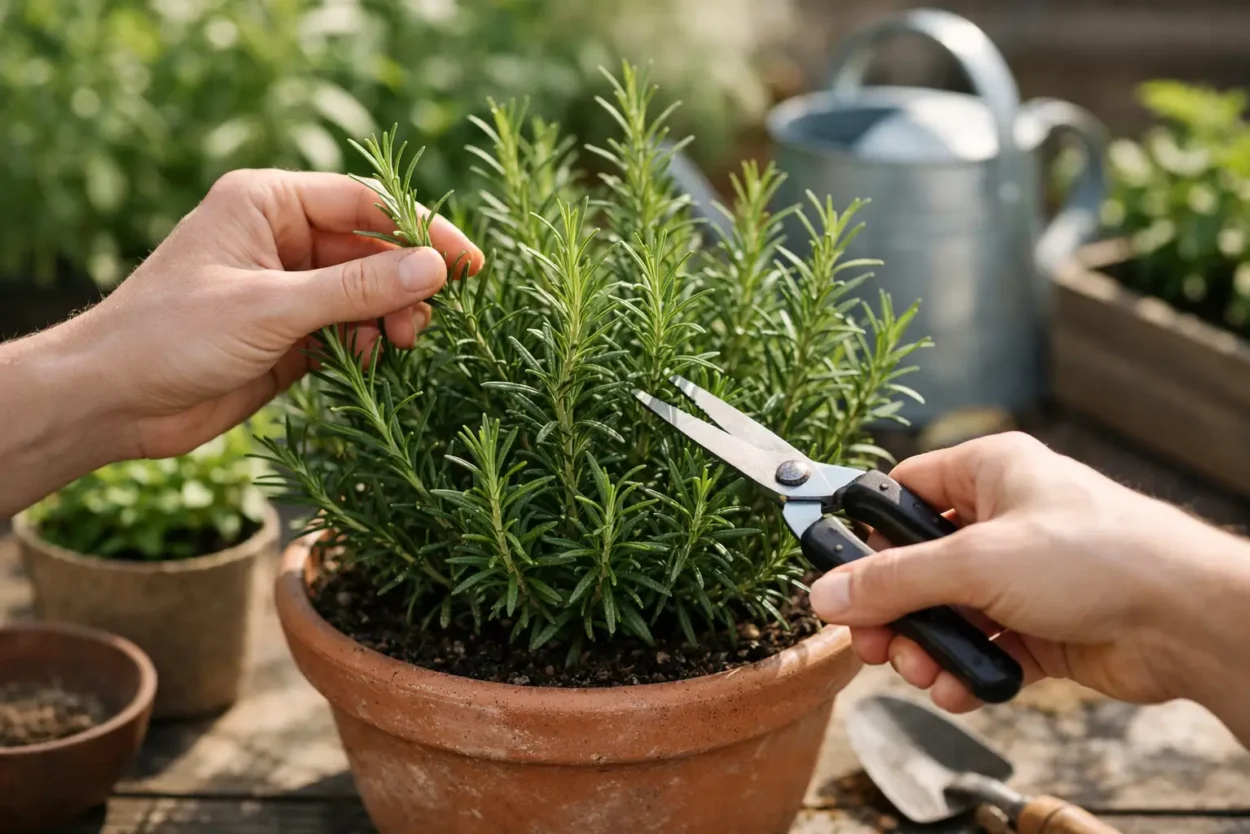
Pruning is more useful than frequent feeding. Snip the soft green tips regularly during the growing season to encourage bushier growth. You can harvest a few inches from multiple stems instead of cutting one branch heavily. This keeps the plant balanced and gives you plenty of fresh rosemary for cooking.
Avoid cutting deeply into old, bare wood. Rosemary does not always regrow well from woody stems with no green leaves. A light trim after flowering or in early spring is usually plenty. If your plant is becoming lopsided, trim the longest branches first and rotate a container every week or two for more even light.
Common Rosemary Problems and Simple Fixes
A rosemary plant that looks unhappy is usually reacting to its environment, not asking for complicated treatment. Check the basics before reaching for fertilizer or pest sprays.
If leaves are turning yellow, reduce watering and make sure the pot drains freely. If stems are long and sparse, move the plant into stronger light. Brown tips may mean inconsistent watering, salt buildup from fertilizer, or very dry indoor heat.
Spider mites and aphids occasionally appear, especially on indoor plants. Rinse the foliage with a gentle stream of water, then inspect the undersides of leaves every few days. Removing pests early is usually enough. Keep the plant away from stressed, overcrowded conditions, since healthy rosemary is less likely to develop serious pest problems.
Harvest Rosemary for the Best Flavor
You can begin harvesting once your plant has several sturdy stems and looks well established. Morning is a great time to cut rosemary because the foliage is usually freshest before the heat of the day. Use clean scissors or garden snips, taking no more than about one-third of the plant at a time.
Fresh rosemary is wonderful in sheet-pan dinners, soups, salad dressings, grilled chicken, focaccia, and cocktails. To save extra sprigs, tie small bundles and hang them in a dry, airy place. Once dry, strip the leaves from the stems and store them in an airtight jar away from direct light.
Growing rosemary is less about doing more and more about giving the plant the conditions it naturally loves: sun, drainage, airflow, and a little room to grow. Get those right, and you will have a fragrant, hardworking herb ready whenever dinner needs a finishing touch.