
Reiki therapy is an increasingly popular form of alternative healing that channels universal energy to support the body’s natural healing process. Discover how this gentle practice can reduce stress, promote relaxation, and bring emotional balance to your life.
Reiki Therapy: What It Is, How It Works, and Its Health Benefits
Reiki therapy is an increasingly popular form of alternative healing based on the idea that universal energy can be channeled to support the body’s natural healing process. Used for stress reduction, deep relaxation, and emotional balance, Reiki is a gentle yet profound therapy.
What is Reiki therapy?
Reiki is a Japanese energy healing technique developed in the early twentieth century by Mikao Usui. The word “Reiki” comes from two Japanese words: “Rei” (universal energy) and “Ki” (the vital energy that flows through all living beings).
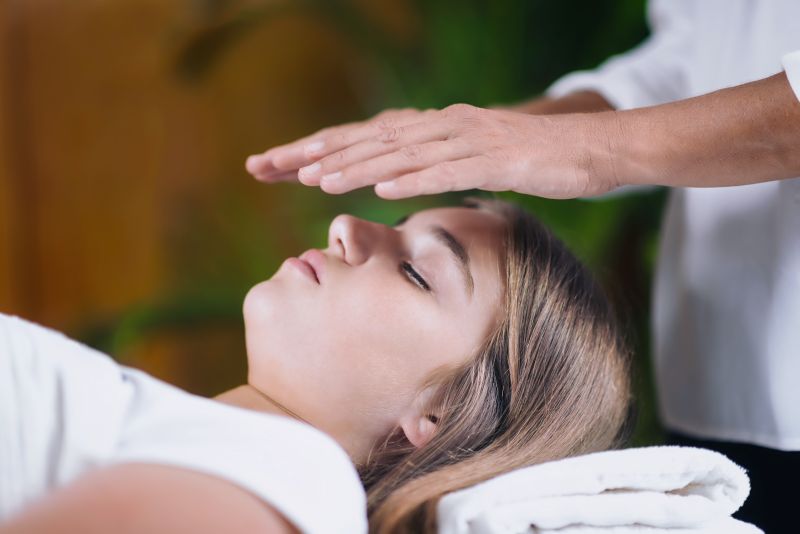
This practice involves placing the therapist’s hands on or above the patient’s body to transmit universal energy that stimulates the body’s natural healing capacity.
How does Reiki therapy work?
During a session, the patient lies down, fully clothed, in a quiet environment. The Reiki therapist places their hands in different areas of the body without pressure and without physical manipulation. Each position is held for a few minutes.
The goal is to unblock and balance the flow of energy, especially in areas affected by stress, pain, or negative emotions. Reiki practitioners claim that the therapy:
- activates the parasympathetic nervous system
- calms the mind and body
- stimulates self-healing
What conditions can Reiki treat?
Although Reiki is not a form of medical treatment, it can be used as a complement alongside conventional medicine. Among the most common issues people turn to Reiki for are:
- stress and anxiety
- depression and emotional exhaustion
- chronic pain (back, head, joints)
- insomnia and sleep disorders
- recovery from surgery or trauma
- digestive disorders caused by stress
- energy imbalances or unexplained states of unease
Reiki is appreciated for the fact that it has no adverse effects, being a gentle and non-invasive method.
How does a Reiki session work?
A session typically lasts between 45 and 60 minutes. During this time:
- The therapist will explain the process and ask you questions about your general condition.
- You will be invited to lie down on a therapy table, fully clothed, in a quiet space.
- The actual treatment begins, with hand positioning in key areas.
- At the end, the therapist may discuss any energy blockages identified and recommendations for follow-up.
Some people feel a sensation of warmth, tingling, or deep relaxation during the session. Others may fall asleep.
How many sessions are needed and when do results appear?
The number of sessions varies depending on the person and the issue being addressed. Generally:
- For stress and relaxation, a single session can bring noticeable benefits.
- For deeper issues (emotional or chronic), a series of 4-6 weekly sessions is recommended.
- After that, monthly sessions can be done for maintenance.
Positive effects often appear from the first meeting: deep relaxation, better sleep, inner peace. Sometimes, changes accumulate gradually over several sessions.
How much does a Reiki session cost?
Pricing varies depending on location and the therapist’s experience. A session costs between 60 and 120 EUR, but there are also therapists who offer packages or distance sessions at reduced prices.
There are also centers that offer free Reiki or on a donation basis, for educational or community support purposes.
Distance Reiki – does it work?
Yes, Reiki can be transmitted at a distance. Therapists with second-degree initiation (Reiki II) can perform energy sessions without physical contact, using special symbols.
Many patients report the same sensations of relaxation and relief as during in-person sessions. It’s a suitable option for people who cannot physically reach a therapist (the ill, people abroad, etc.).
Is Reiki safe for everyone?
Yes, Reiki is considered a non-invasive and safe therapy for all ages – including children, pregnant women, and elderly people.
However, it is important to note that Reiki does not replace medical treatment and should not be used as a substitute in serious cases. However, it can be valuable support in the healing and balancing process.
Frequently Asked Questions About Reiki Therapy
1. Do I need to believe in Reiki for it to work?
Not necessarily. Reiki energy works regardless of belief, but an open mind can intensify results.
2. What do I feel during a session?
Tingling, warmth, sensations of floating, deep relaxation, or even sleep. Reactions vary from person to person.
3. Does Reiki have side effects?
No known negative side effects exist. Some may experience mild detoxification reactions or emotional release.
4. Can I do Reiki on myself?
Yes! There are Reiki initiation courses that allow you to practice on yourself and others.
Conclusion
Reiki therapy is a gentle yet profound way to reduce stress, restore inner balance, and support the body’s natural healing process. Whether you use it as emotional support, a complement to medical treatments, or simply a treat for your soul, Reiki can become a valuable tool for your well-being.


Comments are closed.