
Yellow houseplant leaves signal that something needs adjustment—whether it’s watering, light, or nutrients. Discover the most common causes and practical solutions to restore your plants to health.

Why Houseplant Leaves Turn Yellow: Common Causes and Simple Solutions
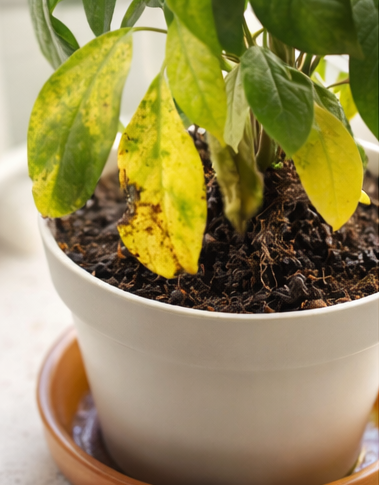
Yellow leaves are one of the most common warning signs when it comes to houseplants. If you’re wondering why houseplant leaves turn yellow, the good news is that in most cases, the problem can be resolved quickly.
Yellowing leaves don’t automatically mean your plant is dying. Most of the time, it’s your plant’s way of telling you that something isn’t right: too much water, too little light, or a small nutrient imbalance.
Yellow leaves on houseplants – what does it mean?
Yellow leaves (a phenomenon known as chlorosis) appear when the plant no longer produces enough chlorophyll. The causes can be varied, from incorrect care to environmental factors.
👉 Important: not all yellow leaves are cause for panic, but the repetition of this phenomenon indicates a real problem.
Incorrect watering – the most common cause
🌱 Too much water
Overwatering is the main reason for yellow leaves on houseplants.
Clear signs:
- yellow, soft leaves;
- permanently moist soil;
- unpleasant smell at root level.
Solution:
- let the soil dry between waterings;
- check if the pot has drainage holes;
- empty the saucer under the pot after watering.

🌵 Too little water
And lack of water can also lead to yellowing leaves.
Signs:
- yellow, dry leaves;
- brown edges;
- very dry soil.
Solution:
- water regularly, but moderately;
- adjust watering according to the season.
Too much or too little light
Houseplants have different light requirements.
☀️ Too much light
- leaves turn yellow and get scorched;
- brown spots appear.
🌤️ Too little light
- leaves turn yellow uniformly;
- slow growth.
Solution: move your plant to a place with indirect light, suitable for its species.

Nutrient deficiencies
Another common reason for yellow leaves on houseplants is lack of nutrients.
What’s usually missing:
- nitrogen – yellow leaves, starting from the bottom;
- iron – yellow leaves, green veins;
- magnesium – yellowing between veins.
Solution:
- apply fertilizer for houseplants;
- follow the recommended dose.
Pot too small or depleted soil
If your plant has been in the same pot for a long time:
- roots have no more space;
- soil no longer contains nutrients.
Solution:
- repot your plant in a slightly larger pot;
- change the substrate once every 1–2 years.

Temperature and air currents
Houseplants are sensitive to:
- large temperature differences;
- cold air from windows;
- hot air from radiators.
👉 These conditions can cause leaf yellowing.
Solution: move your plant away from sources of drafts or direct heat.
Invisible pests at first sight
Mealybugs, spider mites, or whiteflies can affect your leaves.
Signs:
- yellow leaves with spots;
- fine webs;
- sticky leaves.
Solution:
- wash leaves with water and soap;
- use natural solutions or specific insecticides.

When yellow leaves are normal
✔ old leaves, from the base of the plant
✔ seasonal change
✔ adaptation to a new environment
👉 If only 1–2 leaves occasionally turn yellow, it’s not a cause for concern.
Frequently Asked Questions (FAQ)
Should I remove yellow leaves?
Yes, it’s recommended to remove them to encourage healthy growth.
Do yellow leaves turn green again?
No. Once completely yellowed, they don’t turn green again.
Can yellow leaves be a sign of disease?
Yes, when combined with spots or deformations.
Conclusion
Leaf yellowing is a clear signal that your plant needs attention. Whether it’s watering, light, or nutrients, the problem can be resolved easily if identified in time.
If you notice yellow leaves on your houseplants, analyze your care conditions and adjust them – your plants will thank you 🌿



Comments are closed.