
Why are tomato leaves curling? Learn the common causes, from heat and watering stress to pests and disease, plus simple ways to help plants recover fast.
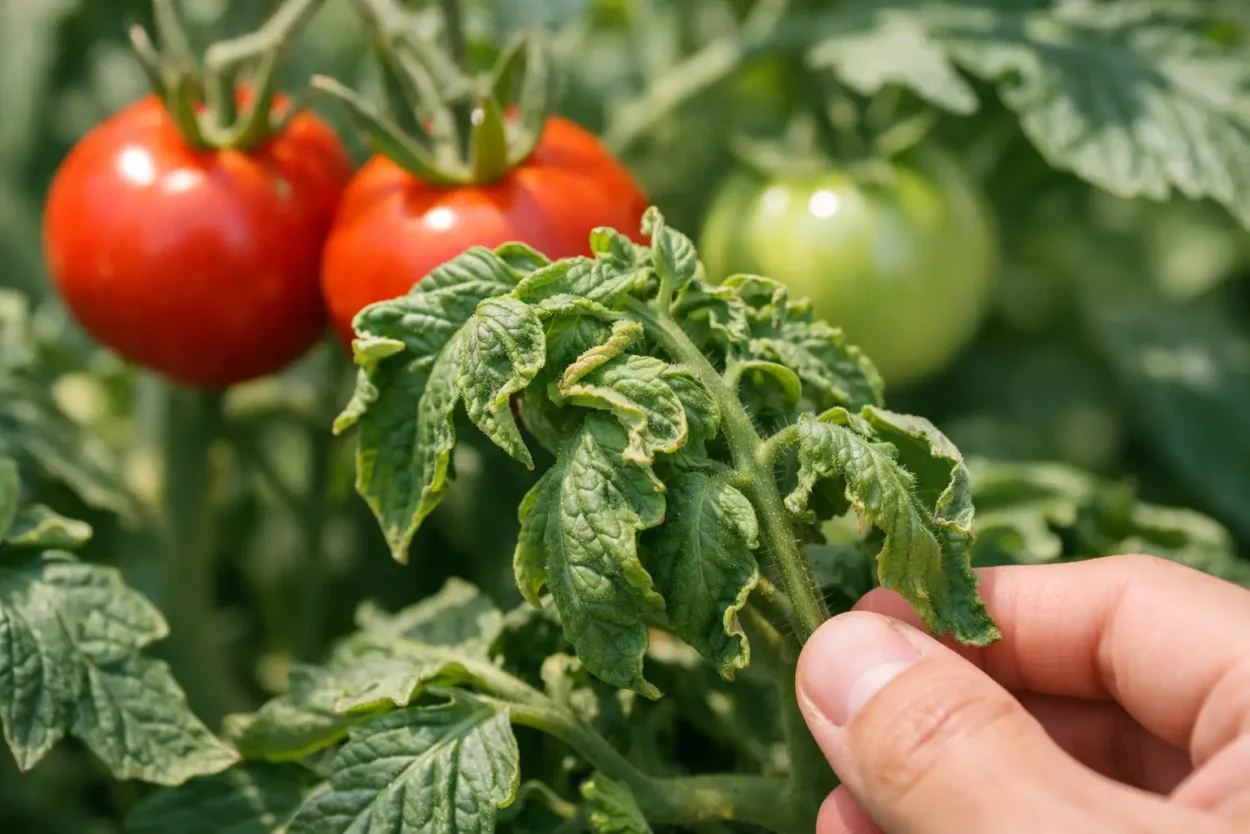
Why Are Tomato Leaves Curling? Causes and Fixes
A tomato plant can look perfectly healthy at breakfast and have curled, twisted leaves by dinner. If you are asking, “why are tomato leaves curling?” the answer is often stress, not disaster. Tomatoes react visibly to changes in water, temperature, pests, and even nearby lawn treatments, so the shape of the curl matters.
Start by looking at the newest growth, the underside of the leaves, and the plant’s overall energy. A few leaves rolling upward on an otherwise productive plant call for a different response than pale, tightly twisted new leaves with stunted growth.
Why Are Tomato Leaves Curling?
Tomato leaves curl when the plant is trying to conserve moisture or is struggling with an environmental or health issue. In many home gardens, the most likely causes are inconsistent watering, hot weather, or a normal condition called physiological leaf roll. These issues are frustrating but usually manageable.
More serious causes include insect damage, herbicide exposure, and viral disease. The key is not to treat every curled leaf the same way. Spraying for pests will not fix heat stress, and adding fertilizer can make a watering problem worse.
Physiological leaf roll: the common, low-drama cause
Physiological leaf roll happens when older leaves curl upward or inward, often becoming thick or leathery while staying mostly green. It is especially common after a stretch of heat, pruning, transplanting, or uneven watering. Indeterminate tomato varieties – the types that keep growing and producing over a long season – are particularly prone to it.
The plant is essentially reducing the leaf surface exposed to sun and wind. It may not look pretty, but if new growth is normal and flowers or fruit are developing, your tomato can still produce well. Avoid stripping off every curled leaf. Those leaves are still helping the plant make energy.
Watering Problems Can Curl Tomato Leaves
Tomatoes like deep, consistent moisture, not a cycle of bone-dry soil followed by a soaking. When roots cannot access enough water, leaves may curl upward to slow moisture loss. Container tomatoes are especially vulnerable because potting mix heats up and dries quickly.
Check soil about 2 inches below the surface before watering. If it feels dry at that depth, water slowly at the base of the plant until the root zone is thoroughly moistened. In hot weather, a large container may need water every day, while an in-ground plant may need less frequent but deeper watering.
Overwatering can create a similar stressed look. Soggy soil pushes oxygen out of the root zone, making it harder for roots to function. Leaves may curl downward, yellow, or look limp even though the soil is wet. Let the top inch or two of soil dry slightly, make sure containers have drainage holes, and do not let pots sit in a saucer full of water.
A 2- to 3-inch layer of mulch around in-ground tomatoes helps keep soil moisture and temperature more stable. Keep mulch a couple of inches away from the stem to discourage rot and pests.
Heat, Sun, and Wind Stress
Tomatoes love warmth, but extreme heat is different. When daytime temperatures climb into the 90s, especially with hot nights, leaves can cup or roll to protect themselves. Intense reflected heat from a wall, patio, or fence can make the problem worse.
If the plant otherwise looks healthy, focus on reducing stress rather than forcing a quick fix. Water in the morning, mulch the soil, and consider temporary afternoon shade during a heat wave. A lightweight shade cloth is useful, but avoid turning a sunny tomato bed into a dark corner. Tomatoes still need plenty of direct light to set and ripen fruit.
Strong, drying wind can also curl leaves, particularly on balconies, rooftops, and exposed yards. Moving a container to a more sheltered spot or using a breathable windbreak can help. Do not wrap the plant tightly, since poor airflow encourages fungal problems.
Check Carefully for Pests
Small pests can distort tomato leaves before you notice the insects themselves. Turn over several curled leaves and inspect the tender tips of the plant. Look for clusters of tiny aphids, pale specks from spider mites, whiteflies that flutter when disturbed, or small thrips.
Aphids often cause curled new growth and leave behind a sticky residue called honeydew. Spider mites are more likely in hot, dry conditions and can create fine webbing and pale stippling on leaves. Whiteflies gather on leaf undersides, while thrips may leave silvery marks or distorted new leaves.
For a minor infestation, rinse plants with a steady stream of water early in the day, aiming at leaf undersides. Repeat every few days as needed. Insecticidal soap can help when used exactly as directed, but it must contact the pests to work. Apply it during cooler parts of the day and never spray a heat-stressed plant in direct afternoon sun.
Avoid reaching for broad-spectrum insecticides first. They can harm beneficial insects that naturally keep aphids and mites in check, creating a bigger pest problem later.
Herbicide Damage Looks Different
Tomatoes are unusually sensitive to weed killers, including products used on lawns or along driveways. Herbicide drift can happen when spray moves in the wind, but damage may also come from contaminated compost, manure, grass clippings, or straw.
Leaves affected by certain broadleaf weed killers often look narrow, twisted, cupped, or strap-like. New growth may be severely distorted, and stems can bend or twist. This is different from the broader, more even rolling associated with heat or watering stress.
If you suspect exposure, stop using any questionable mulch, compost, or lawn clippings near the plant. Rinse foliage with plain water if the exposure was very recent, then give the tomato steady care and time. Mild damage may grow out, but severe damage can reduce harvests. Do not eat fruit from a plant that was directly sprayed with a product not labeled for edible crops.
When Curling Could Be a Tomato Disease
Viral diseases are less common than stress-related leaf curl, but they deserve attention because there is no reliable cure once a plant is infected. Tomato yellow leaf curl virus, for example, can cause curled, thickened leaves, yellowing around veins, stunted growth, and poor fruit set. Whiteflies spread this virus.
Other viruses can create mottled green-and-yellow patterns, misshapen leaves, and slow growth. If a plant has severe curling plus yellowing, mottling, and obvious stunting, it is safer to remove it from the garden rather than hoping it will recover. Bag it before disposal, and do not compost it.
Disease is more likely when new growth is affected across the whole plant. Environmental stress often begins with older leaves or appears after a clear trigger, such as a heat wave or missed watering.
Could Fertilizer Be the Problem?
Too much nitrogen encourages lots of lush green foliage but fewer flowers and fruit. Leaves may look dark green and overly vigorous, sometimes curling or clawing downward. This is common when tomatoes receive frequent lawn fertilizer runoff or repeated doses of a high-nitrogen plant food.
Hold off on fertilizer if the plant is already deep green and growing quickly. For tomatoes in containers, use a fertilizer intended for fruiting plants and follow the package rate. More fertilizer is not better, especially when the real problem is hot, dry, or waterlogged roots.
A Quick Way to Diagnose Curled Tomato Leaves
Before changing your care routine, use this simple check. Consider what changed during the past week: a heat wave, a skipped watering, heavy rain, new fertilizer, pest activity, or weed treatment nearby. Then compare the symptoms.
Upward-curled older leaves that remain green usually point to environmental stress. Downward clawing with very dark leaves can suggest excess nitrogen or overwatering. Twisted, narrow new leaves raise concern about herbicides or pests. Curled leaves combined with yellowing, mottling, and stunting deserve a closer look for viral disease.
Do not prune heavily while the plant is stressed. Remove only leaves that are clearly dead, badly diseased, or resting on the soil. Keeping the plant supported with a cage or stake, watering consistently, and protecting roots with mulch will solve more curling problems than constant interventions.
A curled tomato leaf is a signal, not always a sentence. Give the plant a few days of steady care, watch the new growth rather than obsessing over older damaged leaves, and let your tomato show you whether it is settling back into a productive season.