
Learn how to clean white sneakers with simple supplies, stain-specific tips, and drying advice that keeps canvas, leather, and mesh looking fresh all season.
How to Clean White Sneakers Without Ruining Them
A pair of white sneakers can make a simple outfit look instantly pulled together – until sidewalk dust, coffee drips, and one rainy commute turn them gray. The good news is that learning how to clean white sneakers does not require a specialty kit or an afternoon of scrubbing. With gentle cleaning, the right method for the material, and enough drying time, most pairs can look noticeably brighter again.
The main rule is simple: clean stains early and avoid soaking your shoes. White sneakers may all look similar from a distance, but canvas, leather, suede, and mesh need different levels of care. A little patience protects the shape, glue, and finish of the shoe far better than aggressive scrubbing ever will.
What You Need to Clean White Sneakers
For most canvas, leather, and synthetic sneakers, start with a soft-bristle brush or an old toothbrush, a microfiber cloth, mild dish soap, baking soda, a small bowl of warm water, and a clean towel. A white eraser or melamine sponge can also help with scuffs on rubber soles.
Choose clear or white cleaning products whenever possible. Colored soaps, bright towels, and heavily dyed cleaners can leave behind a faint tint on white fabric. You also do not need very hot water. Lukewarm water is enough to lift everyday grime without loosening adhesive or affecting delicate materials.
Before you begin, remove the laces and knock the soles together outside to release loose dirt. This small step keeps you from rubbing grit deeper into the upper fabric.
How to Clean White Sneakers Step by Step
Start by dry-brushing the entire shoe. Work over the toe box, seams, tongue, and around the eyelets, where dust tends to settle. If the shoes are muddy, let the mud dry first. Wet mud can smear across the fabric and create a bigger cleaning job.
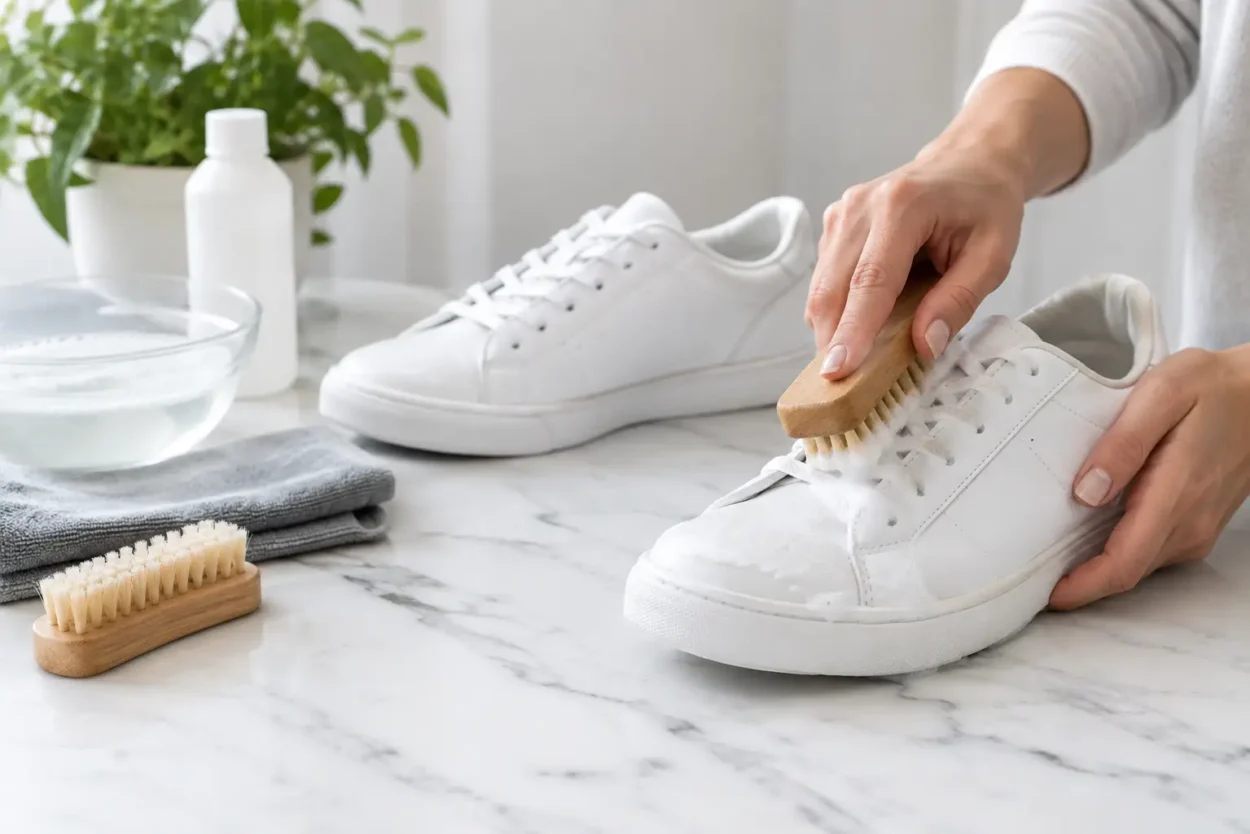
Mix a few drops of mild dish soap into a bowl of lukewarm water. Dip the toothbrush into the mixture, then tap off excess liquid. The brush should be damp, not dripping. Scrub in small circles, focusing on visibly dirty areas first and using lighter pressure on thin fabric or mesh.
As dirt lifts, wipe the surface with a damp microfiber cloth. Rinse the cloth often so you are removing grime rather than spreading it around. Repeat the process in short rounds instead of saturating the shoe all at once.
For stubborn marks on canvas or fabric, make a paste with equal parts baking soda and water. Apply a small amount with your toothbrush, scrub gently, and let it sit for about 10 minutes before wiping it away with a damp cloth. Baking soda can help brighten fabric, but it is still best used sparingly. Too much residue can leave a chalky finish if it is not thoroughly wiped away.
Once the upper looks clean, move to the rubber midsoles and toe caps. These parts can usually handle a little more pressure. Use soapy water and a brush, then try a lightly dampened melamine sponge on scuffs that remain. Keep the sponge away from printed logos or painted details, since it can dull some finishes.
Clean the Laces and Insoles Separately
Laces collect more dirt than they seem to, and clean shoes can still look tired when the laces are gray. Soak white laces in warm water with a small amount of detergent for 15 to 30 minutes, then gently rub them between your hands and rinse well. If they are badly stained or frayed, replacing them is an inexpensive refresh.
If the insoles are removable, take them out and wipe them with a cloth dipped in mild soapy water. Let them air-dry completely before putting them back. Avoid soaking foam insoles, which can take a long time to dry and may hold onto odor.
The Best Method for Canvas Sneakers
Canvas sneakers are usually the easiest white shoes to clean, but they absorb water quickly. Use a soft brush, mild soap, and small amounts of water rather than submerging the entire shoe. The baking soda paste method works especially well on white canvas toe areas and side panels.
A washing machine may sound tempting, but it is not the safest routine option. The spinning and soaking can weaken glue, warp the shoe’s shape, and cause yellowing if the sneakers do not dry evenly. If a care label specifically allows machine washing, use a gentle cold cycle inside a mesh bag and air-dry afterward. Hand cleaning still gives you more control.
How to Clean White Leather Sneakers
Leather needs a lighter touch. Brush away dry dirt, then wipe the surface with a soft cloth dampened with water and a tiny amount of mild soap. Do not use baking soda paste, bleach, or a rough scrubber on leather. These can dry out the finish, create dull spots, or leave behind visible scratches.
For scuffs on smooth white leather, a white eraser can be surprisingly effective. Rub lightly and check your progress often. After cleaning, wipe away any soap with a separate damp cloth, then dry the surface with a towel.
Leather sneakers benefit from being cleaned more frequently but less intensely. A quick wipe after a few wears keeps stains from setting in and means you will rarely need a deep-cleaning session.
Be Extra Careful With Mesh and Suede
White mesh can snag or lose its shape if it is scrubbed too hard. Use a very soft toothbrush or cloth, work gently, and keep moisture to a minimum. Dab stains rather than pushing hard into the fabric. If your mesh sneakers have colored overlays, test any cleaning mixture on a hidden spot first.
Suede is different from canvas and leather. Water can leave marks and change its soft texture, so avoid traditional soap-and-water cleaning. Use a suede brush to lift dry dirt and a suede eraser for small stains. For salt lines or difficult marks, a professional shoe cleaner may be the safer choice, especially if the sneakers are expensive or sentimental.
Should You Use Bleach on White Sneakers?
Bleach feels like the obvious answer for anything white, but it is rarely the best choice for sneakers. It can turn some fabrics yellow, weaken fibers, damage glue, and leave harsh spots on rubber. Even diluted bleach is unpredictable across different materials.
A mild soap solution, baking soda paste for washable fabric, and a little targeted elbow grease are usually enough. If your shoes are still yellow after cleaning, the issue may be aging, sun exposure, or an old stain that has oxidized. Cleaning can improve the appearance, but it cannot always restore bright factory white.
How to Dry Sneakers Without Yellowing Them
Drying matters as much as washing. Stuff each shoe loosely with plain white paper towels or a clean white cloth to help it hold its shape and absorb moisture from inside. Replace the paper if it becomes very wet.
Leave sneakers in a cool, well-ventilated spot away from direct sunlight, radiators, and hair dryers. High heat can warp soles, weaken glue, and encourage yellow patches on white materials. It can take 12 to 24 hours for a pair to dry fully, depending on the fabric and how much water was used.
Do not wear them while they are even slightly damp. Moisture trapped inside can lead to odor and makes fresh dirt stick faster.
Keep White Sneakers Cleaner Between Washes
The easiest way to maintain white sneakers is to give them a quick wipe after wear, especially after walking in rain, grass, or city streets. Store them indoors away from direct sun, and rotate pairs when you can so each one has time to air out.
For a weekly reset, brush the soles and wipe down the upper with a damp cloth. This takes only a few minutes and prevents the gradual buildup that makes a once-white shoe look permanently dull. A water-repellent protector can be useful for canvas and some leather pairs, but always check that it is suitable for your sneaker material first.
White sneakers are meant to be worn, not kept in a box waiting for a perfect day. Treat stains early, clean gently, and let them dry properly, and your favorite pair can stay part of your everyday rotation for much longer.