
Learn the safe chicken temperature for breasts, thighs, wings, and whole birds, plus thermometer tips for juicy, confidently cooked meals every time.
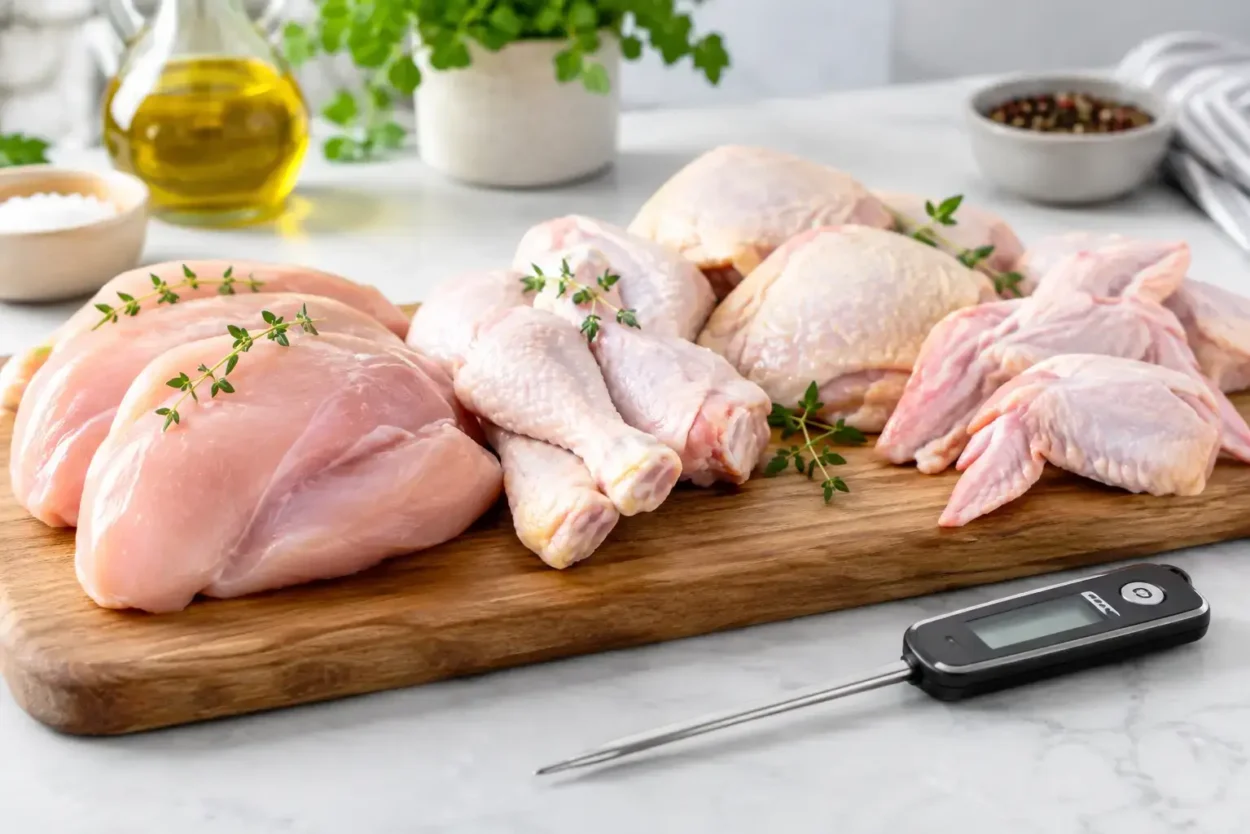
Safe Chicken Temperature for Every Cut at Home
That golden, sizzling chicken can look ready long before it is actually safe to eat. The safe chicken temperature is 165°F, measured with a food thermometer at the thickest part of the meat. It is the simple number that takes the guesswork out of weeknight dinners, Sunday roasts, meal prep, and everything from crispy wings to chicken tacos.
The good news: checking the temperature takes seconds, and it does not mean settling for dry chicken. With the right thermometer placement and a few cooking habits, you can serve chicken that is both safely cooked and genuinely juicy.
What Is the Safe Chicken Temperature?
Chicken is safe to eat when its internal temperature reaches 165°F. This applies to chicken breasts, thighs, drumsticks, wings, whole chickens, ground chicken, and chicken-based casseroles.
That temperature matters because raw poultry can carry bacteria, including Salmonella and Campylobacter. Cooking chicken to 165°F reduces that food-safety risk without requiring you to cut into every piece and hope for the best.
For the most reliable reading, use an instant-read digital thermometer. Color, texture, clear juices, and cooking time can offer clues, but they cannot confirm that the center of the chicken is cooked to a safe temperature. A browned exterior can hide an undercooked middle, especially with thicker breasts, bone-in cuts, or chicken cooked straight from the refrigerator.
Where to Check Chicken Temperature
A thermometer only helps if it is placed in the right spot. Insert the probe into the thickest portion of the meat, avoiding bones, the pan, and large pockets of fat. Bone can heat differently from the meat and give you a misleadingly high number.
Chicken Breasts
Check the center of the thickest part of the breast from the side, rather than poking straight down from the top. If your chicken breasts are unevenly thick, the larger end is the place to test. Thin cutlets cook quickly, so start checking a few minutes before the recipe’s suggested finish time.
Boneless, skinless breasts are the cut most likely to turn dry when overcooked. Take them off the heat at 160°F to 162°F only if you are confident they will rest and rise to 165°F. For a no-stress approach, cook to 165°F before serving.
Thighs and Drumsticks
For thighs and drumsticks, test the thickest area without touching the bone. They are safe at 165°F, but many people prefer dark meat closer to 175°F to 185°F. At that higher range, connective tissue softens and the meat often becomes more tender and flavorful.
This is one of the few cases where cooking beyond the minimum is usually a win. Chicken thighs are more forgiving than breasts because they contain more fat.
Wings
Wings are small, so insert the thermometer into the meatiest section near the center, away from the bone. They should reach 165°F. If you want extra-crisp skin, keep cooking after they reach that point, watching closely so the sauce or skin does not burn.
Whole Chicken
A whole chicken needs more than one temperature check. Test the thickest part of the breast and the innermost part of the thigh, without touching bone. Both areas should reach 165°F.
The thigh often cooks more slowly than the breast, particularly in a large bird. If the breast is done but the thigh is not, return the chicken to the oven and check again after several minutes. Tenting the breast loosely with foil can help protect it from drying out while the dark meat finishes.
Ground Chicken
Ground chicken must also reach 165°F. Because grinding distributes bacteria throughout the meat, it should never be judged by a browned exterior alone. Use a thermometer for chicken burgers, meatballs, meatloaf, and skillet crumbles.
Can Chicken Be a Little Pink at 165°F?
Yes. Chicken can occasionally remain pink even when it is safely cooked to 165°F. This is especially common near bones, in smoked chicken, and in younger birds. Natural pigments in the meat can react with heat, oxygen, or smoke and create a pink color that looks alarming but is not automatically a sign of undercooking.
On the other hand, white meat does not guarantee safety. A chicken breast may look fully white on the outside while the thickest part has not yet reached a safe temperature. The thermometer reading matters more than appearance.
If the chicken is at 165°F but you are still unsure, check a second spot. This is particularly helpful for extra-thick breasts and large bone-in pieces. If both readings are at or above 165°F, the chicken is ready.
How Resting Helps Keep Chicken Juicy
Resting chicken is not just a restaurant trick. It gives the juices time to settle back into the meat instead of running onto the cutting board. For boneless breasts, five minutes is usually enough. Bone-in cuts and a whole chicken benefit from 10 to 15 minutes.
Temperature can rise slightly while chicken rests, a process called carryover cooking. That is why some experienced cooks remove chicken breasts just below 165°F. Still, carryover heat varies based on the cut, cooking method, and size of the chicken. If food safety feels uncertain, cook to 165°F before taking it off the heat rather than relying on a temperature increase that may not happen.
Cover chicken loosely with foil while it rests. Wrapping it tightly traps steam, which can soften crispy skin.
Common Safe Chicken Temperature Mistakes
The most common mistake is relying on cooking time alone. A recipe might say to bake chicken breasts for 25 minutes, but oven accuracy, pan material, breast thickness, and starting temperature all affect the result. Treat timing as a guide, then verify with a thermometer.
Another frequent issue is checking too close to the surface. The outside always heats first, so a shallow reading can make chicken seem done before its center is safe. Aim for the deepest, thickest section every time.
Avoid washing raw chicken in the sink. Rinsing does not make it safer, and splashing water can spread raw juices onto countertops, dishes, and nearby foods. Pat it dry with paper towels if needed for better browning, then wash your hands and sanitize the prep area.
Finally, do not reuse a plate, tongs, or brush that touched raw chicken unless you wash it first. Put cooked chicken on a clean plate, and use fresh utensils for serving.
Temperature Tips for Different Cooking Methods
Whether you bake, grill, air-fry, sauté, or slow-cook chicken, the final internal temperature stays the same: 165°F. What changes is how quickly the outside cooks and how easy it is to overcook the meat.
On the grill, direct heat can char the exterior before thick pieces are done. Move chicken to a cooler zone if it is browning too fast, then check the center. In an air fryer, leave space between pieces so hot air can circulate and cook them evenly. For skillet chicken, a moderate heat gives the inside time to cook without burning the outside.
Slow cookers are convenient for shredded chicken, soups, and chili, but they are not an excuse to skip the thermometer. Check the thickest pieces before shredding. If you are cooking a whole chicken in a slow cooker, test both breast and thigh just as you would with an oven-roasted bird.
Safe Temperatures for Leftover Chicken
Reheat cooked chicken leftovers to 165°F before eating. This applies whether you are warming a chicken breast in the microwave, reheating wings in the air fryer, or adding leftover rotisserie chicken to a casserole.
Store cooked chicken in the refrigerator within two hours of cooking. If the room temperature is above 90°F, such as during a hot picnic or backyard cookout, refrigerate it within one hour. Divide large amounts into shallow containers so they cool faster, then reheat only the portion you plan to eat.
When using a microwave, stir or rotate food when possible because microwaves can create hot and cold spots. Let it stand briefly after heating, then check that the center is steaming hot and has reached 165°F.
A thermometer may feel like one more kitchen tool to clean, but it is one of the easiest ways to cook with confidence. Once you make 165°F part of your routine, chicken dinner becomes less of a question mark and more of a meal you can enjoy.