Learn how to choose foundation shade by checking undertones, testing in natural light, and matching formula to your skin for a believable finish every day.
How to Choose Foundation Shade That Looks Natural
Foundation that looks perfect in a store mirror can suddenly look too orange, too pink, or strangely pale in your car. Learning how to choose foundation shade is less about finding a color with a familiar name and more about seeing how it behaves on your actual skin, in real daylight.
The good news: you do not need a makeup artist or a drawer full of wrong bottles to get it right. A few simple checks can help you find a base that blends into your skin instead of sitting on top of it.
Start With Your Skin Depth and Undertone
Foundation matching has two parts. Skin depth is how light or deep your complexion is. Undertone is the subtle color beneath the surface of your skin. Two people may have the same skin depth but need completely different foundations because one has warm golden undertones and the other has cool rosy undertones.
Most brands label undertones with terms such as cool, warm, neutral, golden, olive, or peach. Those labels are useful, but they are not always consistent from one brand to the next. Treat them as a starting point rather than a guarantee.
Cool undertones usually lean pink, red, or bluish. Warm undertones tend to look golden, yellow, peachy, or slightly orange. Neutral undertones are a balance of warm and cool tones. Olive skin can have a green-gray or golden-green cast and may look neutral at first glance, even when many standard neutral foundations appear too pink.
Easy ways to spot your undertone
Look at your bare skin near a window, preferably without self-tanner or leftover makeup. If gold jewelry tends to brighten your face and your skin has a golden cast, you may be warm. If silver looks especially flattering and your skin appears rosy, you may be cool. If both work well, neutral could be your best match.
The vein test can offer a clue, but do not rely on it alone. Blue or purple-looking veins are often associated with cool undertones, while greener veins can suggest warm or olive undertones. Lighting, skin depth, and even the color of your walls can make this test misleading.
Your white shirt test may be more revealing. Hold a bright white fabric near your face in daylight. Does your skin look pinker, yellower, more golden, or slightly green? Notice what stands out naturally rather than what you think you should see.
Match Foundation to Your Neck and Chest
A common mistake is testing foundation only on the back of your hand. Your hands are often darker, redder, or more sun-exposed than your face, so a hand swatch can lead you to the wrong shade.
Instead, apply a small stripe from the lower cheek across the jawline and slightly onto the neck. Your ideal foundation should make your face look connected to your neck and chest. It should not create a visible line under your jaw or make your face look lighter than the rest of your body.
If your face is naturally darker than your neck because of sun exposure, acne marks, or redness, use your chest as the deciding area. The goal is an even, believable overall look. You can always add warmth and dimension later with bronzer or blush, but correcting a face that is too pale or too dark is much harder.
How to Choose Foundation Shade in the Store
Store lighting is designed to flatter products, not necessarily to show accurate skin color. Fluorescent lights can make skin look washed out, while warm retail lighting can hide an orange mismatch. Whenever possible, step outside or stand near a window before deciding.
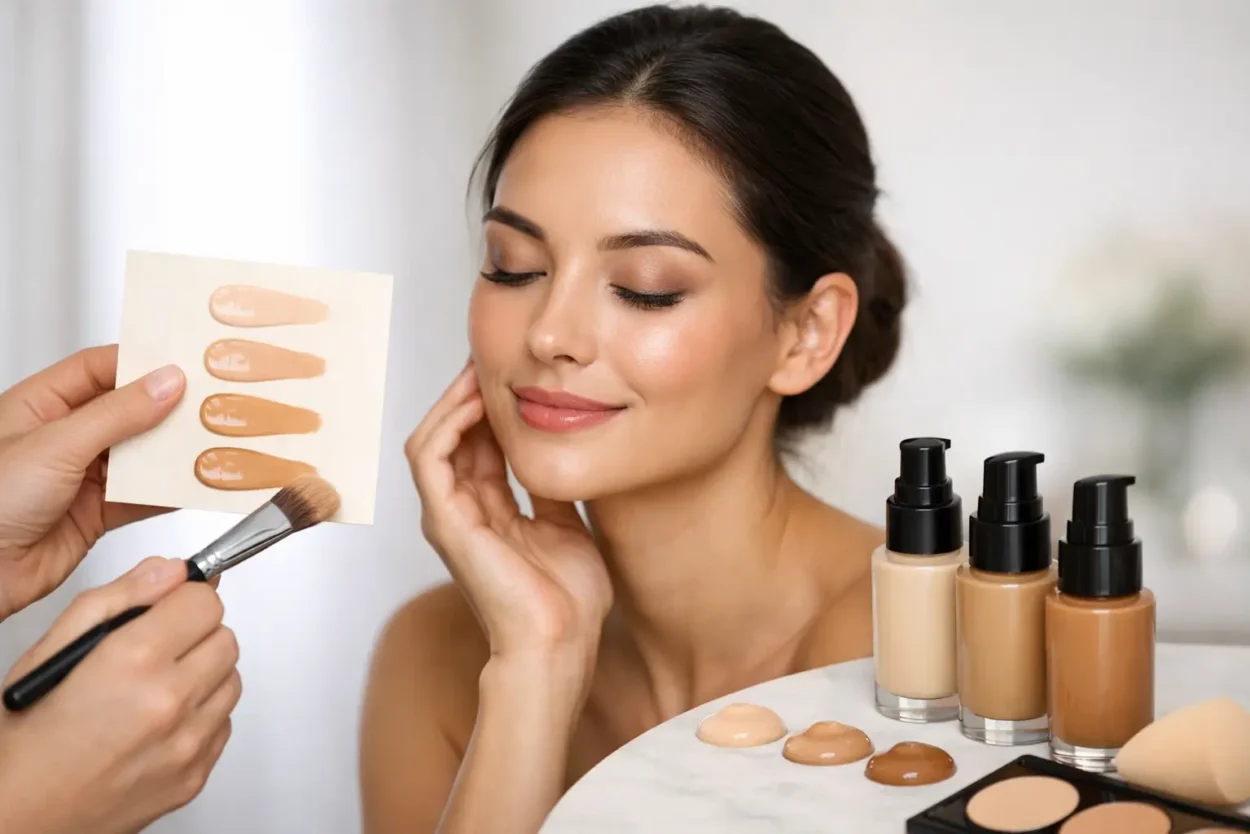
Choose three shades that seem close: one you think is right, one slightly lighter, and one slightly deeper. Apply thin stripes along your jawline rather than blending them in immediately. Give them a few minutes to settle, then check which shade seems to disappear into the skin.
The right shade will not always look exciting in the swatch. In fact, it may look almost invisible. The shade that makes your complexion look brighter or more polished on its own can be too light, too pink, or too warm once it is blended over your entire face.
If a beauty store offers samples, take advantage of them. Wear your top choice for several hours before opening a full-size product. Check it in daylight, indoor light, and photos. This small step can save money and prevent a frustrating makeup bag cleanup later.
Wait for Oxidation Before You Commit
Some foundations oxidize, meaning they become darker, warmer, or slightly more orange after they mix with air and your skin’s natural oils. It is especially common with liquid formulas, though the amount varies widely by product and skin type.
After swatching, wait at least 10 to 15 minutes before making your choice. If you have oily skin or a foundation tends to change color on you, wear it for a few hours first. A shade that is perfect at 10 a.m. but orange by lunchtime is not your best match.
This is also why a foundation you loved last year may not work now. Skin-care changes, oiliness, seasonal tanning, and a new primer can all affect the way a formula wears and shifts.
Consider Your Formula and Coverage Level
Shade matters most, but formula affects whether that shade appears true to skin. A sheer skin tint can be forgiving because your natural complexion shows through. Medium and full-coverage foundations are less forgiving, so a close match is essential.
Matte foundations can sometimes look a little deeper or more opaque once dry. Dewy formulas may reflect light and appear slightly brighter. Powder foundation can look lighter when first applied, then melt into the skin as your natural oils come through.
If you are between shades, the best choice depends on the formula. With a sheer, flexible tint, the deeper option may blend beautifully. With a full-coverage matte foundation, a slightly lighter shade is often easier to warm up with bronzer. Still, do not go noticeably lighter just to avoid looking too dark. A pale foundation can create a gray or mask-like effect, especially in flash photos.
Account for Seasonal Changes
Many people need more than one foundation shade. Your complexion may be lighter in winter and deeper or warmer in summer, even if you wear sunscreen consistently. There is no rule saying you must find one bottle that works every day of the year.
A practical approach is to keep a lighter winter shade and a deeper summer shade in the same formula and undertone family. During transition months, mix a small amount of each on the back of your hand before applying. This gives you a custom match without buying a new foundation every few weeks.
If you prefer a single shade, choose the one that matches your usual skin tone for most of the year. You can adjust it slightly with bronzer in summer or use less product for a sheerer effect when it is not exact.
Do Not Let Redness Choose Your Shade
Rosacea, breakouts, and surface redness can make you think you need a pinker or redder foundation than you actually do. But foundation should match your undertone, not mimic temporary redness.
For example, someone with warm undertones and red cheeks may still need a warm or neutral foundation. Applying a rosy shade all over can make the redness look stronger. Match the more even-toned areas of your face and neck, then use a small amount of concealer or color corrector only where needed.
The same idea applies to hyperpigmentation and dark spots. Do not select a deeper foundation to match those areas. Use a true skin match as your base, then add targeted coverage where you want it.
Check Your Match With a No-Makeup Test
Once you think you have found your shade, apply it to one side of your face with the amount you would normally wear. Leave the other side bare for a moment and look straight ahead in natural light.
A good match should even out your complexion while still looking like your skin. Your face should not look dramatically lighter, darker, yellower, or pinker than your neck. Take a photo with and without flash, too. Cameras can reveal a mismatch that bathroom lighting hides.
If you are choosing between two close shades, favor the one that makes your neck, chest, and face look most continuous. Foundation is there to create a fresh, even canvas, not announce itself before the rest of your makeup has a chance to shine.
Finding your foundation shade may take a little trial and error, but once you know your depth, undertone, and preferred formula, shopping becomes far easier. Keep a note of shades that work, notice how they change across seasons, and give yourself permission to adjust as your skin does.