Home decor trends are getting warmer, softer, and more personal. See the colors, materials, and easy updates that make a room feel current and comfortable.
Home Decor Trends That Feel Fresh and Livable
The most appealing home decor trends are not asking you to replace every piece of furniture you own. They are making rooms feel less staged and more like places where real life happens: softer lighting, warmer colors, meaningful objects, and layouts that invite you to stay awhile. Think of the goal as a home that looks considered without feeling too precious to use.
For many households, the best approach is selective rather than all-in. A new lamp, a painted wall, or a better-looking storage solution can change the mood of a room far more than a full redesign. Here are the home updates bringing warmth, character, and everyday comfort to the forefront.
Home Decor Trends Are Moving Toward Comfort
For years, cool gray finishes, matching furniture sets, and sparse shelves dominated inspiration feeds. Clean lines still have a place, but the look is becoming more relaxed. Homes are leaning into layered texture, gentle curves, and colors that feel connected to nature.
This shift makes sense for busy people. A room with a washable slipcover, a reading lamp, and a basket for blankets is easier to live with than one designed only for photos. The current look favors a little imperfection: a handmade vase, a stack of books, an inherited side table, or artwork that does not perfectly match the rug.
The key is editing. Personal does not have to mean crowded. Give favorite objects room to breathe, and choose pieces that add either function, warmth, or a memory. If an item does none of those things, it may be contributing more clutter than character.
Warm neutrals replace stark all-white rooms
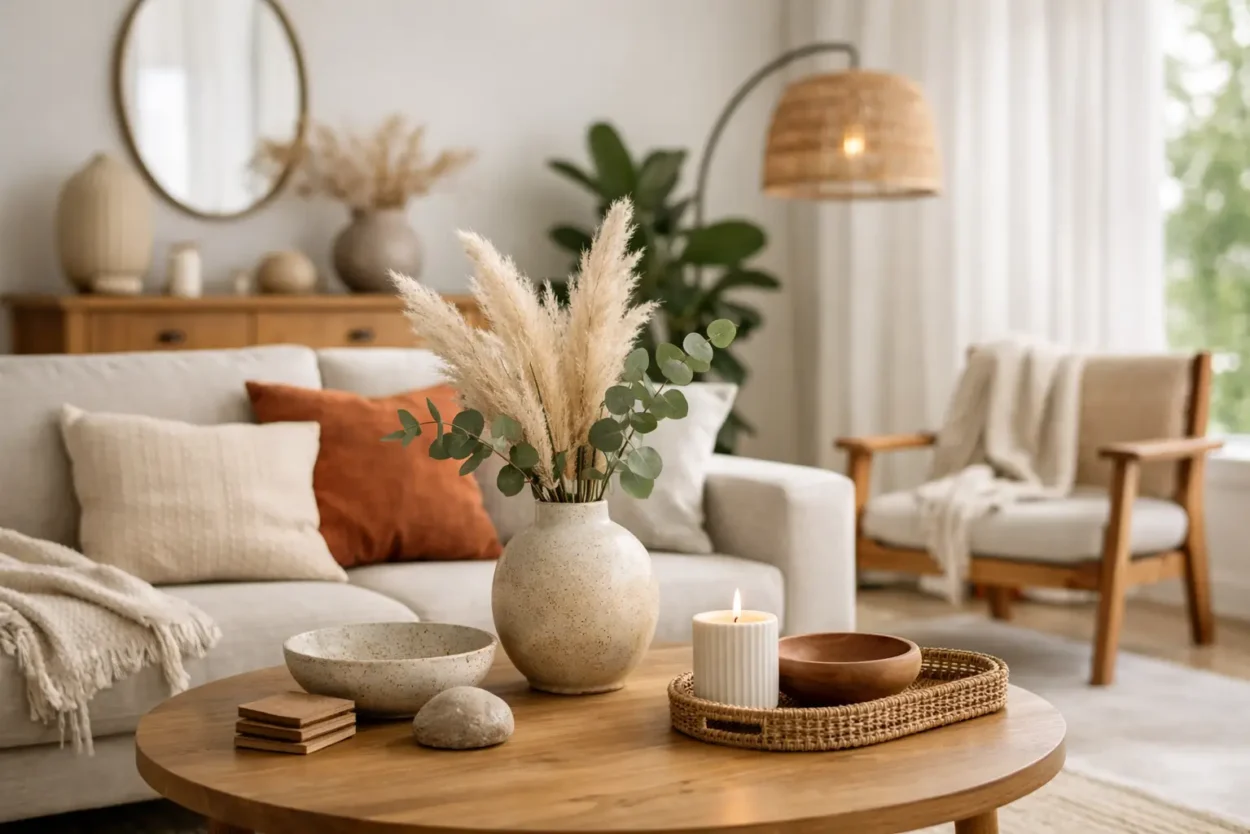
White walls are not disappearing, but flat, bright white rooms are giving way to creamier shades with yellow, pink, or beige undertones. Colors such as soft oatmeal, mushroom, putty, clay, and warm taupe make a space feel calm without making it dark.
A warm neutral is especially useful if you are decorating around existing furniture. It can make a black sofa look more intentional, soften chrome fixtures, and help wood tones feel richer. Before committing, test paint samples on different walls and check them in morning, afternoon, and evening light. A shade that looks like a cozy cream in the store can read surprisingly yellow in a sunny room.
If painting feels like too much, bring this palette in through linen curtains, a large rug, pillow covers, or an upholstered accent chair. These pieces have visual impact but are easier to change later.
Earthy colors are becoming more expressive
Warm neutrals provide the backdrop, while muddy greens, rust, deep blue, burgundy, and butter yellow are adding personality. These colors feel grounded rather than loud when used in softened, slightly muted versions.
Try one stronger color where it can make a difference: a green kitchen island, a plum throw blanket, or terracotta-colored dining chairs. Small rooms can handle color, too. In fact, a compact powder room or entryway is an ideal place for a bolder choice because you do not spend hours looking at it.
The trade-off is longevity. A dramatic paint color may feel exciting now but become tiring if it covers every wall in an open living area. If you are color-curious but cautious, use saturated tones on lower-risk items first, such as lampshades, art, bedding, or removable wallpaper.
The Home Decor Trends Bringing in Texture
Texture is doing much of the work that stark contrast once did. Instead of relying on a single sleek finish, rooms feel more inviting when they mix materials that look and feel different. A woven shade near a plaster-like wall, a wood table paired with upholstered chairs, and a ceramic bowl on a stone tray can create depth without adding more color.
Natural-looking materials are particularly popular because they make a home feel settled. Wood grain, linen, cotton, rattan, jute, wool, clay, and stone all bring visual softness that manufactured finishes sometimes lack.
Curves soften hard-working spaces
Rounded furniture is one of the easiest ways to make a room feel current. Look for an arched mirror, a curved-back dining chair, a round coffee table, or a lamp with a globe-shaped base. These details break up the many straight lines created by windows, cabinets, screens, and rectangular rugs.
You do not need a giant curved sofa to get the effect. In a small apartment, a round ottoman or pill-shaped mirror may be the smarter choice. Large sculptural furniture can look beautiful, but it needs enough open space around it. Otherwise, it can make a narrow room harder to move through.
Natural materials need a practical plan
Real wood, stone, and linen can elevate everyday rooms, but they are not always the easiest choices for every family. Marble stains, open-weave rugs catch crumbs, and pale linen upholstery can require more maintenance than expected.
Choose the real thing where touch and durability matter most, such as a solid wood dining table or cotton bedding. For high-traffic spots, performance fabric, porcelain tile that resembles stone, or a washable rug may be the better investment. A home should support your routine, not add another item to your weekend cleaning list.
Lighting Is Becoming Part of the Decor
Overhead lighting alone can make even a beautifully furnished room feel unfinished. One of the most useful home decor trends is treating lighting as a layer, much like pillows or curtains. A ceiling fixture provides general brightness, but table lamps, floor lamps, and wall lights create the welcoming glow people actually notice at night.
Aim for at least two light sources in a living room and bedroom when possible. Put a lamp near a reading chair, add a small light to a console or dresser, and choose warm bulbs rather than harsh cool-white ones. Dimmers are a worthwhile upgrade in dining areas and living rooms because they let the same room work for cooking, homework, guests, and movie night.
Statement fixtures are also becoming more playful. Pleated shades, colored glass, paper lantern forms, and sculptural ceramic bases can act like functional art. Just keep scale in mind. A tiny pendant over a large dining table can look accidental, while an oversized fixture in a low-ceiling room may overwhelm everything around it.
Collected Rooms Beat Perfectly Matched Sets
Matching every surface is no longer the goal. The most welcoming spaces blend new finds with older pieces and use art, books, and objects to show who lives there. That could mean framing vacation photos alongside prints, using your grandmother’s dresser as a bar cabinet, or displaying a favorite collection in one contained area.
Start with a simple foundation: a sofa, bed, or dining table that suits your lifestyle. Then add personality gradually. A vintage-looking wood stool beside a modern chair can make a room more interesting, but it helps to repeat one element, such as color, wood tone, or metal finish, so the mix still feels connected.
Shelves are a good place to practice this idea. Rather than filling every inch, group objects in loose clusters and vary their height. Add a small plant, a candle, a stack of books, and one object with an unusual shape. Leave a few open areas. Empty space is what lets the pieces you love stand out.
Make Everyday Storage Look Intentional
Real homes need storage, and hiding every practical item is not always realistic. The smarter approach is choosing storage that blends into the room: lidded baskets for blankets and toys, a bench with hidden compartments, a cabinet with doors for media equipment, or matching bins inside open shelving.
This matters most in entryways, kitchens, and living rooms, where daily items can pile up quickly. Give frequently used things a designated home close to where they are used. Hooks by the door, a tray for keys, and a basket for mail will not make a space magazine-perfect, but they can prevent the visual chaos that makes a room feel less relaxing.
If you are updating just one area this season, start with the room that affects your daily mood most. Add a softer bulb, bring in one warm texture, clear a surface, and choose an object that makes you happy to see it. The best trend to follow is the one that makes coming home feel better.