
Learn how to plant basil seeds indoors or outdoors with easy timing, soil, light, and watering tips for fragrant leaves you can harvest all season long.
How to Plant Basil Seeds for a Fresh Kitchen Crop
A $3 packet of basil seeds can turn a sunny windowsill, patio pot, or garden bed into a steady source of fragrant leaves for pasta, salads, and summer drinks. The key when you plant basil seeds is not complicated equipment. It is warmth, light, and resisting the urge to give tiny seedlings too much water.
Basil is one of the most rewarding herbs for beginners because it grows quickly and keeps producing when harvested well. Starting from seed also gives you more variety than the standard grocery-store basil plant, from compact Genovese types for containers to purple basil and Thai basil with its spicy, licorice-like flavor.
When to Plant Basil Seeds Indoors or Outside
Basil loves warm weather. Its seeds germinate best when the soil is consistently warm, and young plants can struggle if temperatures dip below 50°F. That makes timing more important than most gardeners expect.
For an earlier crop, start seeds indoors about six to eight weeks before your area’s last expected spring frost. A warm room and a bright window can work, though a simple grow light is more reliable, especially if your windows do not get several hours of direct sun.
To sow directly outside, wait until all frost danger has passed and nighttime temperatures are regularly above 55°F. In many parts of the US, that means late spring. If the soil still feels chilly, wait another week or two. Basil planted later in warm soil often catches up quickly with seedlings started indoors.
If you live in a hot climate with a long growing season, you can make a second sowing in early or midsummer. This is an easy way to replace plants that have begun flowering or to keep a fresh supply going into fall.
How to Plant Basil Seeds Step by Step
Choose a container with drainage holes or a garden spot that gets six to eight hours of sun. Basil can grow in partial sun, particularly in very hot regions, but it will be fuller and more flavorful with plenty of light.
Use a light, fresh potting mix for containers rather than dense soil from the yard. In garden beds, loosen the soil and mix in compost if it is heavy or low in organic matter. Basil likes moisture, but its roots do not enjoy sitting in soggy ground.
Sow shallowly
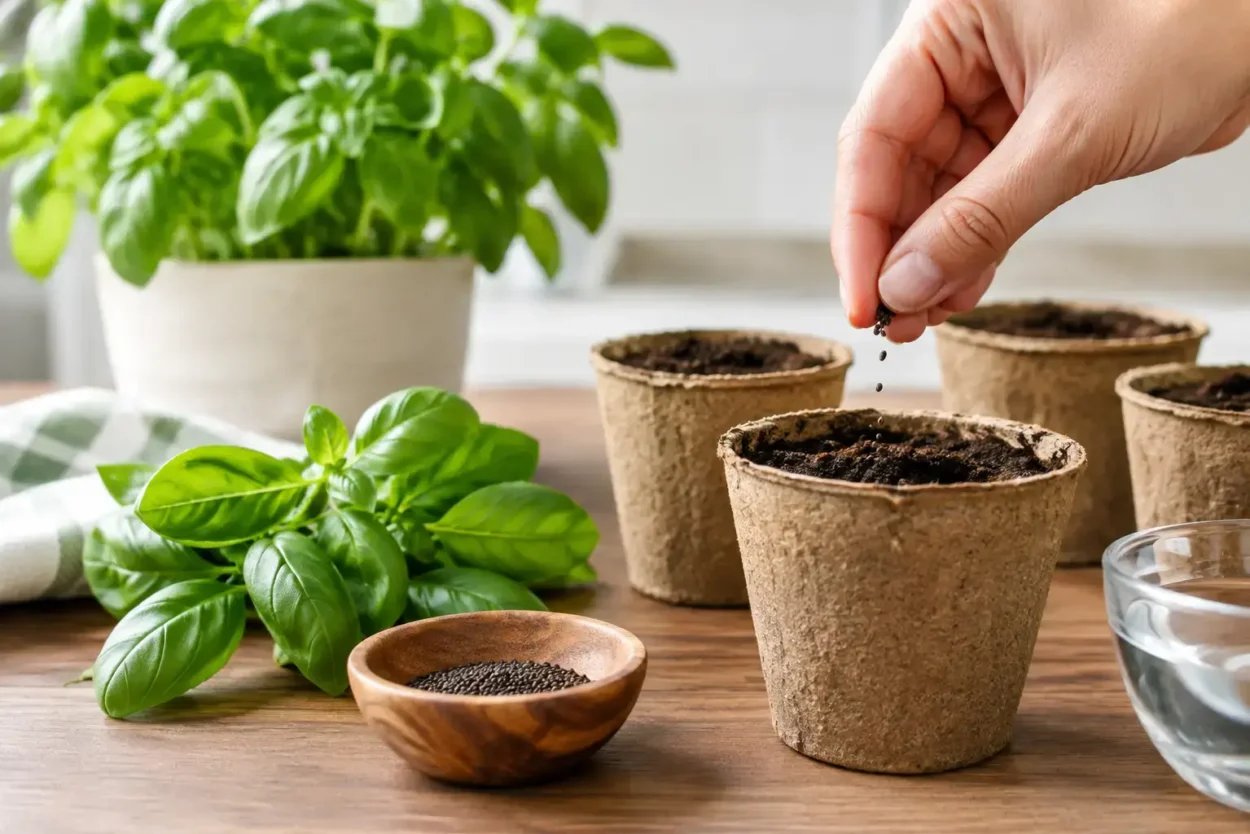
Fill your pot with moistened potting mix, leaving about half an inch of room at the top. Scatter seeds lightly over the surface, then cover them with about 1/4 inch of soil. Basil seeds are small, and planting them too deeply is one of the fastest ways to get disappointing germination.
Gently mist the surface or water with a very soft stream. The goal is to settle the seeds without washing them into a clump. For direct sowing, make a shallow row, sprinkle the seeds along it, cover lightly, and pat the soil down with your hand.
Keep the soil warm and lightly moist
Basil seeds usually sprout in five to 10 days, though cooler conditions can make them take longer. Covering an indoor seed tray with a clear humidity dome or loose plastic wrap can help hold moisture until sprouts appear. Remove the cover as soon as you see green shoots so air can circulate.
Check the soil daily. It should feel like a wrung-out sponge: moist but never muddy. A spray bottle is useful in the first week because it prevents the seedbed from being disturbed.
Give seedlings room to grow
Once seedlings have two sets of true leaves, thin them so the strongest plants have space. In containers, aim for one plant per 6-inch pot or three small plants in a 12-inch-wide container. In a garden bed, leave roughly 10 to 12 inches between plants.
It can feel wasteful to remove seedlings, but crowding leads to weaker plants, poor airflow, and more disease issues later. If you started several seedlings in one pot, you can carefully transplant a few into their own containers after they have developed true leaves.
The Care That Makes Basil Bushy
Sunlight and regular pinching make the biggest difference between one tall, sparse basil plant and a lush plant you can harvest from for months. Place container basil where it gets morning through early-afternoon sun. In regions with intense summer heat, a little late-day shade can prevent leaf scorch.
Water deeply when the top inch of soil feels dry. Container plants dry out much faster than garden plants, sometimes every day during a heat wave. Instead of following a strict schedule, check the soil with a finger. Droopy basil that perks up after watering was thirsty; consistently wet soil points to overwatering.
When plants are about 6 to 8 inches tall, pinch off the top set of leaves just above a pair of lower leaves. This encourages two new branches to form. Keep pinching branch tips every week or two, especially before flower buds open.
Flowers are pretty and edible, but flowering shifts the plant’s energy toward making seeds. The leaves may also become less tender and more peppery. If you want the longest harvest, remove buds as soon as they appear. If you want to save seeds or support pollinators, let one healthy plant flower at the end of the season.
Basil grown in quality potting mix usually needs little fertilizer. If leaves look pale after a month or two, feed with a diluted, balanced liquid fertilizer every three to four weeks. Too much fertilizer can create lots of large leaves with a milder flavor, so a light hand works best.
Common Problems After You Plant Basil Seeds
If your seeds do not sprout, cold soil is the most likely reason. Move indoor pots to a warmer location, such as the top of a refrigerator before germination, or use a seedling heat mat if you start herbs often. Old seeds and deeply buried seeds can also reduce success.
Long, leaning seedlings need more light. Move them closer to a sunny window, rotate the pot every day, or use a grow light positioned a few inches above the plants. Do not try to fix legginess with extra water or fertilizer.
Yellow leaves can mean several things. If lower leaves yellow while the soil is wet, let the pot dry slightly and make sure excess water can drain. If a well-established plant is pale but the soil drains well, it may benefit from a small dose of fertilizer.
Chewed leaves are often caused by slugs, snails, or Japanese beetles in outdoor beds. Check plants in the evening and look under leaves. For a small home crop, hand-picking pests and keeping the planting area tidy is usually enough.
Harvest Basil Early and Often
You can begin harvesting once a plant has several sturdy stems and is at least 6 to 8 inches tall. Rather than plucking single leaves from the bottom, snip a stem just above a pair of leaves. That cut encourages branching and keeps the plant compact.
Take no more than one-third of the plant at a time, especially when it is young. Harvest in the morning after dew has dried for the best flavor. Fresh basil does not love the refrigerator, so keep cut stems in a glass of water on the counter and use them within a few days.
Can basil grow from seed on a windowsill?
Yes, as long as the windowsill gets strong direct light for much of the day. A south-facing window is often best in the Northern Hemisphere. If your basil stretches toward the glass or grows slowly, a grow light will give more dependable results.
How many basil seeds should you plant in one pot?
Plant a small pinch, usually five to eight seeds, in a 6-inch pot to improve your odds of germination. Once seedlings are growing, thin to the strongest one or two plants. In a larger planter, space final plants about 10 inches apart.
Do basil seeds need to be soaked before planting?
No. Basil seeds germinate well without soaking. Keeping the soil evenly moist and warm matters far more than any pre-planting step.
Start with one pot and a packet of seeds, then let the first handful of homegrown leaves guide your next meal. A little attention now can make fresh basil one of the easiest kitchen staples you grow.