
See a realistic retinol before and after example, learn the timeline for smoother-looking skin, and build a routine that helps prevent irritation safely.
Retinol Before and After Example: What to Expect
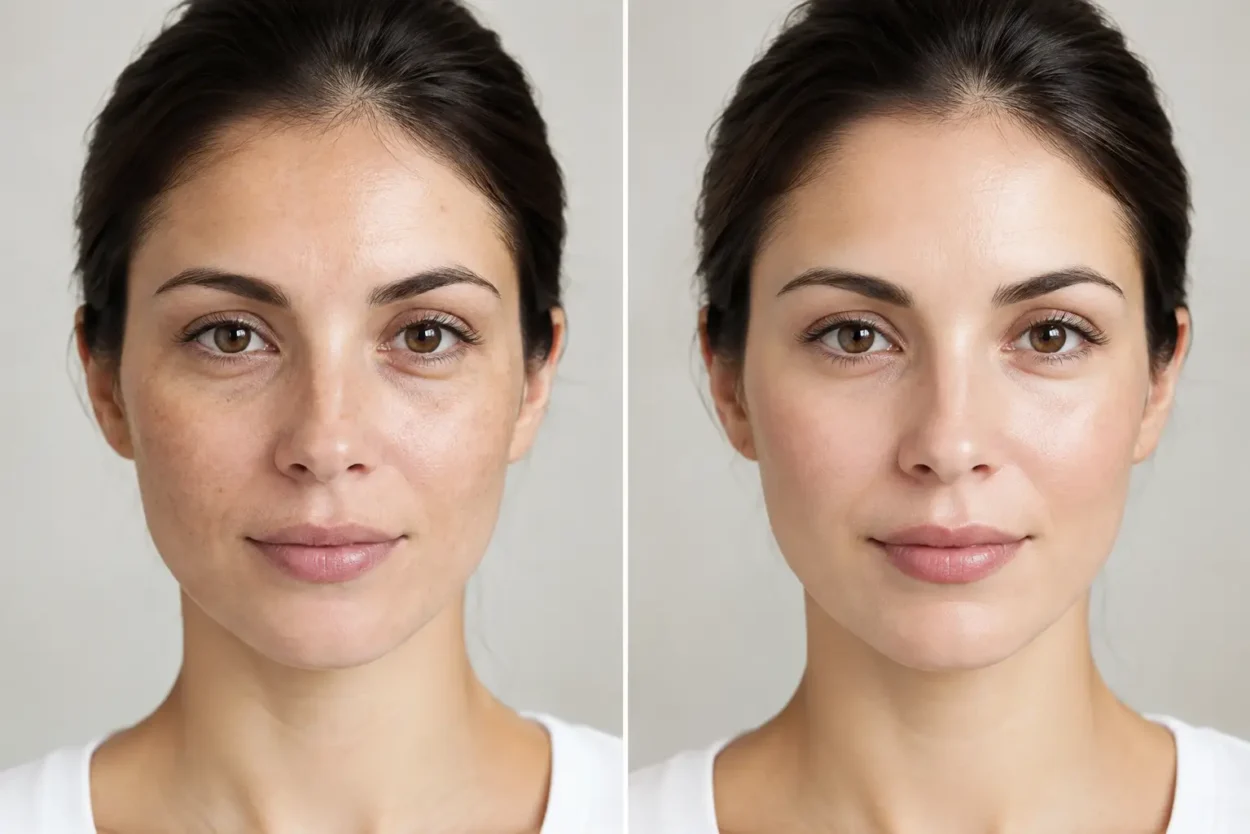
A retinol before and after example can look surprisingly subtle at first: a few fewer clogged pores, makeup sitting more smoothly, or skin that seems a little brighter in daylight. The bigger changes usually build slowly. Retinol is not an overnight fix, but steady use can make a visible difference in texture, fine lines, and uneven tone over several months.
If you have scrolled past dramatic transformation photos, it helps to know what those pictures do not show: lighting, skin type, strength of the formula, and consistency all matter. A realistic plan is far more useful than expecting your complexion to change in two weeks.
A Realistic Retinol Before and After Example
Imagine someone in their early 30s with mild breakouts around the chin, noticeable pores through the T-zone, and early fine lines near the eyes. Before starting retinol, their skin may look a little uneven, especially under foundation, with occasional rough or flaky patches.
During the first two to four weeks, they might not see a visible improvement at all. In fact, skin can feel dry, tight, or slightly irritated while it adjusts. Some people also notice more small breakouts at first, particularly if congestion was already forming beneath the skin. This is often called purging, though not every new blemish is a purge. Painful, itchy, or persistent breakouts can also be a sign that the product is too strong or being used too often.
By weeks six to eight, a common before-and-after change is smoother texture. Tiny bumps may be less noticeable, and the skin can start to look more even. At around three months, many regular users notice that their complexion looks clearer and more polished, while fine lines may appear softer. Results for dark spots and more established acne marks often take three to six months, sometimes longer.
The most believable retinol before and after example is not poreless, filtered skin. It is skin that looks healthier, more even, and better cared for while still looking like skin.
What Retinol Can Improve
Retinol is a vitamin A derivative that encourages faster skin-cell turnover and supports collagen over time. That is why it appears in routines for both acne and early signs of aging. It can help improve the look of clogged pores, roughness, post-breakout marks, fine lines, and dullness.
Still, results depend on the concern. Retinol may soften the appearance of fine lines, but it will not erase deep wrinkles. It can fade some discoloration, but melasma and stubborn dark spots may need a more targeted approach from a dermatologist. It may also help manage mild acne, while cystic or scarring acne deserves professional guidance rather than a bathroom-shelf experiment.
The product itself matters, too. Over-the-counter retinol is generally gentler than prescription retinoids, which can deliver faster and more dramatic results but are also more irritating. For a beginner, a lower-strength retinol used consistently is often a smarter choice than jumping immediately to the strongest formula.
Your Retinol Timeline, Week by Week
There is no single schedule that fits every complexion, but this general timeline helps set expectations.
Weeks 1 to 2: The adjustment period
Use retinol just two nights a week. Your skin may feel normal, or you may see dryness around the nose, mouth, or eyes. Keep the rest of your routine simple and moisturizing. This is not the time to add exfoliating acids, scrubs, or several new active ingredients.
Weeks 3 to 6: Building tolerance
If your skin feels comfortable, move up to every third night or alternate nights. Mild flaking can happen, but burning, swelling, cracking, or intense redness means you should pause. Let your skin recover before trying again less frequently.
Weeks 6 to 12: Early visible results
This is when smoother texture and a brighter overall look may become easier to spot. Take a makeup-free photo in the same window or bathroom lighting every month if you want an honest comparison. Daily mirror checks are frustrating because retinol changes are gradual.
Months 3 to 6: The payoff period
With consistent use and daily sunscreen, skin may look more even and refined. Some people see fewer clogged pores and less frequent breakouts. Others notice that foundation applies more evenly or that their skin feels firmer. Keep your expectations personal rather than comparing your progress with an influencer’s photo.
How to Use Retinol Without Wrecking Your Skin Barrier
The best routine is often boring in the best way: gentle cleanser, moisturizer, retinol on selected nights, and broad-spectrum SPF 30 or higher every morning. Sunscreen is essential because sun exposure can worsen discoloration and undermine the improvements you are trying to make.
At night, apply a pea-sized amount of retinol to fully dry skin. Damp skin can increase irritation. Avoid the corners of the nose, the lips, and the immediate eye area unless the product is specifically made for those areas. Follow with moisturizer.
If you are sensitive, try the sandwich method. Apply a light layer of moisturizer, then retinol, then another layer of moisturizer. It can slightly reduce the intensity of the treatment, but it also makes regular use more realistic for dry or easily irritated skin.
For the first few months, be careful about pairing retinol with strong exfoliating acids, benzoyl peroxide, or physical scrubs on the same night. Some people can combine these products later, but the trade-off is a higher chance of irritation. Alternate evenings are usually easier on the skin.
Why Your Before-and-After Results May Differ
Your skin type, age, climate, and starting routine can all change the outcome. Oily skin may tolerate more frequent use, while dry or reactive skin may do better with a low-strength cream once or twice weekly. A humid summer routine may also feel completely different from a winter routine when indoor heat is drying your skin out.
Formula texture matters as much as percentage. A creamy retinol with nourishing ingredients may suit dry skin, while a lightweight serum may appeal to someone prone to clogged pores. More expensive does not automatically mean more effective. The product you can use comfortably and consistently is the one most likely to earn a good before-and-after result.
Patience also matters. Switching products every two weeks makes it hard to tell what is helping and what is causing irritation. Give a well-tolerated retinol routine at least eight to 12 weeks before judging early results, unless your skin is clearly unhappy.
When to Skip Retinol or Ask a Professional
Retinoids are generally not recommended during pregnancy. If you are pregnant, trying to conceive, or breastfeeding, ask your OB-GYN or dermatologist about options that fit your situation. You should also check with a dermatologist before using retinol if you have eczema, rosacea, a damaged skin barrier, or are taking prescription acne treatments.
Stop using the product and seek advice if you develop significant swelling, hives, severe burning, or a rash that does not settle after stopping. A little dryness is common. Skin that feels painful is not a sign that the product is working better.
A thoughtful retinol routine is less about chasing a dramatic photo and more about giving your skin the time and support it needs. Start low, use sunscreen faithfully, and let small improvements add up. The best before-and-after is the one that leaves your skin feeling comfortable as well as looking brighter.