
Our duolingo app review breaks down lessons, pricing, features, and real-life results so you can decide if it’s worth your time.
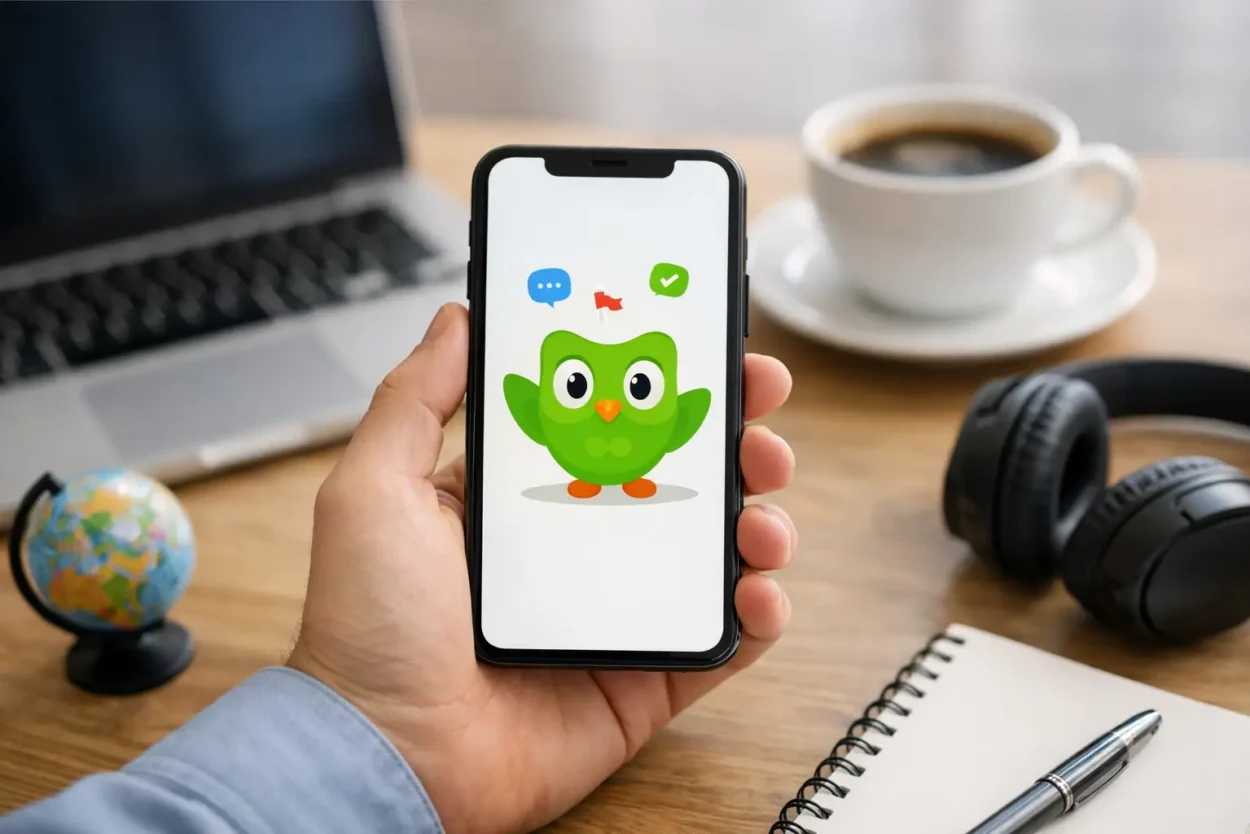
Duolingo App Review: Is It Worth Your Time?
Five minutes into Duolingo, you feel productive. There are bright icons, quick wins, and that little green owl cheering you on like you just ran a marathon instead of matching “apple” to a picture. That mix of motivation and simplicity is exactly why a duolingo app review matters – especially if you want to learn a language without turning it into a second job.
For many people, Duolingo is the first app they try. It is free to start, easy to use, and built for short daily sessions that fit into a commute, lunch break, or couch scroll. But popularity does not always equal effectiveness. The real question is whether Duolingo helps you make meaningful progress or just keeps you busy.
Duolingo app review: what the app does well
Duolingo is built for beginners, and that is its biggest strength. The app lowers the barrier to entry so much that starting feels almost effortless. You pick a language, take a quick placement test if you want, and begin with short exercises that focus on vocabulary, sentence structure, listening, and simple translation.
The design is clean and friendly. Lessons are bite-sized, which makes the app much less intimidating than a textbook or full online course. If you have ever wanted to learn Spanish, French, Italian, or another language but felt overwhelmed, Duolingo gives you a place to begin without pressure.
Its gamified system also works surprisingly well for motivation. Streaks, points, leagues, and reminders create momentum. For some users, that daily habit is more valuable than a perfect curriculum. Language learning depends heavily on consistency, and Duolingo is very good at getting people to come back tomorrow.
Another plus is variety. You are not only reading words on a screen. You listen, type, match, speak, and repeat. The exercises are short, but they change often enough to keep sessions from feeling flat. That matters for casual learners who want progress without boredom.
Where Duolingo falls short
Duolingo is best seen as a starting point, not a complete language solution. That distinction matters.
The app can help you recognize words and basic sentence patterns, but it is less reliable when it comes to natural conversation. Real people speak faster, use slang, interrupt each other, and rarely sound like lesson audio. If your goal is to order coffee on vacation, build travel confidence, or get comfortable with beginner phrases, Duolingo can help. If your goal is business fluency or deep conversational ability, it will not be enough on its own.
Grammar is another mixed area. Some learners enjoy figuring patterns out through repetition, but others want direct explanations. Duolingo tends to favor practice first and theory second. That makes the app feel approachable, yet it can leave users confused about why an answer is wrong.
There is also the issue of repetition. Repetition helps memory, but too much of it can make the app feel like a game you are trying to win rather than a language you are trying to use. If you are someone who likes context, culture, and open-ended speaking, the experience may start to feel limited after the early stages.
How effective is Duolingo for real learning?
This depends on what you mean by “real learning.”
If your goal is to build a daily learning habit, improve vocabulary, and get familiar with basic sentence structure, Duolingo is effective. It makes language learning feel manageable, which is half the battle for busy adults. The app is especially useful for beginners who have no idea where to start.
If your goal is to speak comfortably with native speakers, Duolingo becomes more of a support tool than the main event. You will likely need extra practice through podcasts, videos, conversation partners, or another course that explains grammar and encourages more free-form speaking.
That does not make the app bad. It just means the right expectation is important. Duolingo is very good at helping people begin and keep going. It is less impressive as a stand-alone path to fluency.
Duolingo app review: free vs paid
One reason Duolingo remains so popular is the free version. You can access a large amount of content without paying, which makes it one of the easiest language apps to try before committing. For casual learners, that may be enough.
The paid plan, often called Super Duolingo, removes ads and adds features like unlimited mistakes, practice options, and progress tools. Whether it is worth it depends on how often you use the app.
If ads annoy you and you practice daily, the upgrade can make the experience smoother. If you only open the app a few times a week, the free version is usually fine. The core lessons are still there, and that is what matters most.
The paid tier improves convenience, not the app’s entire educational value. That is an important trade-off. You are paying for a better user experience, not a completely different method.
Best for beginners, travelers, and casual learners
Duolingo fits certain lifestyles really well. If you like low-pressure routines and want to learn in small bursts, the app feels almost tailor-made for you. It works nicely for travelers preparing for a trip, busy professionals squeezing in ten minutes a day, or anyone revisiting a language they studied years ago.
It is also helpful for people who need motivation. Some language tools are technically excellent but easy to abandon. Duolingo understands habit psychology better than most. It gives you rewards, visible progress, and enough structure to keep going even when your schedule gets messy.
For kids and teens, the bright design can be a plus, though adult learners may eventually want something more substantial. For total beginners, though, that friendly tone is part of the appeal. It makes learning feel accessible instead of academic.
Who may want something more advanced
If you are serious about becoming conversational quickly, you may outgrow Duolingo faster than expected. Learners who want detailed grammar instruction, longer listening practice, or realistic speaking exercises often need another tool fairly early.
This is especially true if you are learning for work, school, or relocation. In those cases, structure matters more than streaks. You may need lessons that explain verb tenses clearly, teach natural phrasing, and push you to produce original speech rather than tap through multiple choice.
That said, Duolingo can still play a role. It works well as a daily practice layer alongside stronger resources. Think of it as the app that keeps the language in your life between more focused study sessions.
The user experience in everyday life
One of Duolingo’s best features is how easy it is to keep around. You do not need a desk, notebook, or perfect study environment. You can finish a lesson while waiting in line or sitting in your car before an appointment. That convenience is hard to beat.
The flip side is that quick access can encourage shallow engagement. It is easy to do lessons half-distracted and feel accomplished without retaining much. The app works best when you are intentional, even if your session is short. Reading answers carefully, repeating phrases out loud, and reviewing mistakes can make a big difference.
In other words, Duolingo rewards consistency, but results still depend on effort. The app makes showing up easy. It cannot do the active thinking for you.
Final verdict
So, is Duolingo worth your time? For most beginners, yes. It is one of the easiest, most approachable ways to start learning a language, and it does a great job of turning intention into a daily habit. That alone gives it real value.
The catch is that Duolingo works best when you know what it is. It is a friendly launchpad, not a magic shortcut. If you want a simple, motivating app to help you build momentum, it delivers. If you want fluency, treat it as one piece of the puzzle and let it support a broader learning routine.
The smartest way to use Duolingo is not to ask whether it can do everything. It is to ask whether it can help you finally begin – and then keep going long enough for the language to become part of your life.