Mineral sunscreen vs chemical sunscreen: learn the key differences, pros, cons, and how to choose the best formula for your skin and routine.
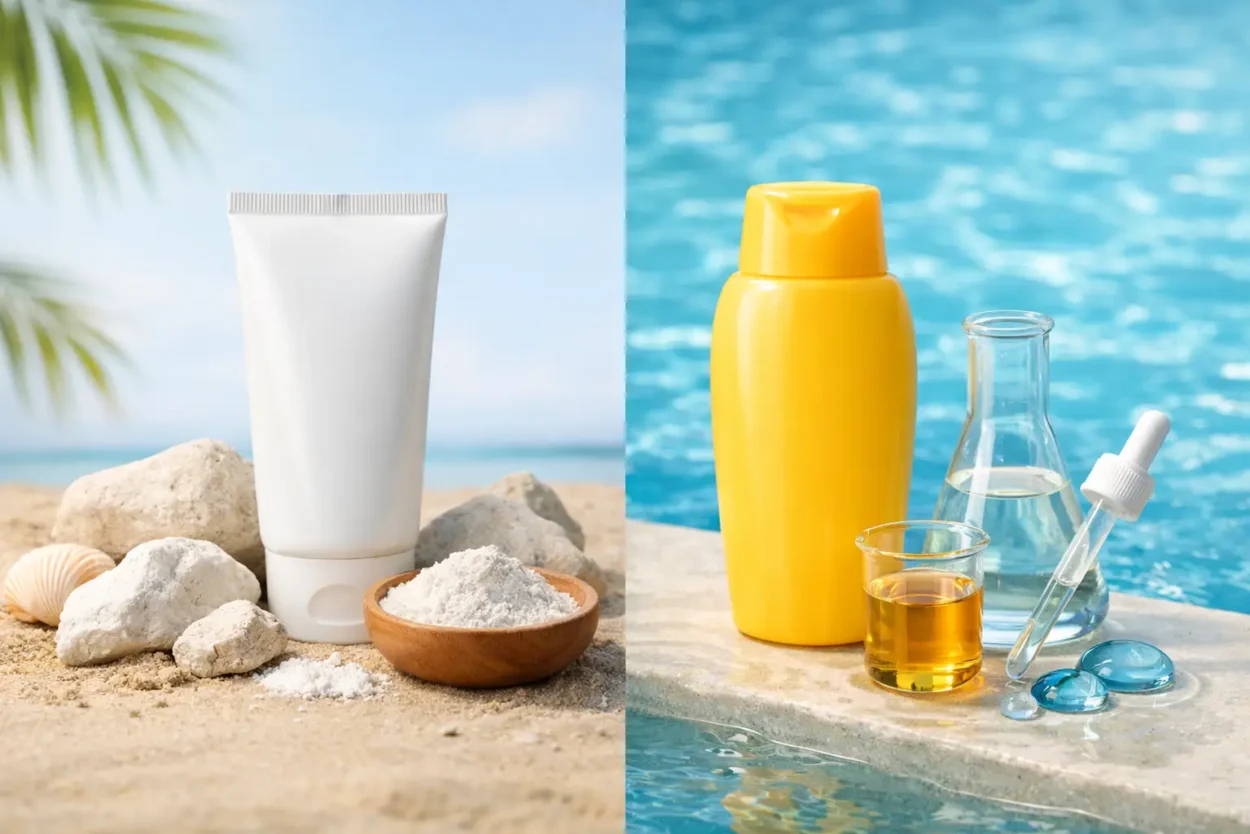
Mineral Sunscreen vs Chemical Sunscreen
Standing in the sunscreen aisle can feel weirdly high-stakes. If you have ever picked up two bottles, read “mineral” on one and “chemical” on the other, and wondered which one is actually better, you are not alone. The mineral sunscreen vs chemical sunscreen debate matters because the right formula is the one you will actually wear every single day.
Both types can protect your skin from sun damage, premature aging, and hyperpigmentation. The real difference comes down to how they work, how they feel on your skin, and which one fits your routine without turning sunscreen into a daily struggle.
Mineral sunscreen vs chemical sunscreen: what’s the difference?
Mineral sunscreen, sometimes called physical sunscreen, uses active ingredients like zinc oxide and titanium dioxide. These sit on the skin’s surface and help block UV rays. Chemical sunscreen uses ingredients such as avobenzone, octisalate, octocrylene, and homosalate, which absorb UV rays and convert them into heat.
That sounds technical, but the practical version is simpler. Mineral formulas are often chosen by people with sensitive, acne-prone, or reactive skin. Chemical formulas are often chosen by people who want something lightweight, invisible, and easy to layer under makeup.
Neither category is automatically superior across the board. A sunscreen can be mineral and feel heavy, or chemical and feel elegant. A lot depends on the formula, your skin type, and whether you are using it for the beach, your commute, or long days outside.
How mineral sunscreen feels on skin
Mineral sunscreen usually has a thicker, creamier texture. That can be a plus if you like a product that feels protective and less likely to sting. It can also be a downside if you hate anything that feels chalky or greasy.
The biggest complaint is the white cast. Because zinc oxide and titanium dioxide are white pigments, some mineral sunscreens can leave a visible film, especially on medium, tan, deep, and rich skin tones. Tinted mineral sunscreens help a lot, but the tint range is not always truly inclusive.
On the other hand, mineral formulas tend to be well tolerated by people whose skin flares up easily. If your face gets red from fragranced products, strong actives, or certain sunscreens, mineral options are often worth trying first.
How chemical sunscreen feels on skin
Chemical sunscreen usually wins on texture. Many formulas are thin, smooth, and nearly invisible once blended in. That makes them popular for daily wear, especially if you use moisturizer, foundation, concealer, or other layered products.
If you have deeper skin tones and are tired of sunscreen making your face look gray or ashy, chemical formulas can be much easier to wear. They also tend to come in gel, serum, fluid, and spray textures that feel less noticeable.
The trade-off is that some people find chemical sunscreens irritating, especially around the eyes. If sunscreen always seems to migrate and sting when you sweat, the active ingredients may be the issue. That does not mean all chemical sunscreens will bother you, but it is a common reason people switch.
Which one is better for sensitive skin?
If your skin is easily irritated, mineral sunscreen is often the safer starting point. Dermatologists frequently recommend zinc oxide-based formulas for people with rosacea, eczema-prone skin, or post-procedure skin because they are generally gentler.
That said, “gentler” does not mean perfect. Some mineral sunscreens still contain fragrance, essential oils, or rich emollients that can clog pores or trigger reactions. The label “mineral” is helpful, but it is not the whole story.
If your skin is sensitive and acne-prone, look beyond the sunscreen type. Pay attention to texture and finish too. A heavy balm-like mineral formula may not be ideal for oily skin, while a lightweight lotion with zinc could work beautifully.
Which one is better for acne-prone or oily skin?
This is where it really depends. Many people with acne-prone skin prefer mineral sunscreen because zinc oxide has a reputation for being calming. But some mineral formulas are thick enough to feel suffocating, especially in heat and humidity.
Chemical sunscreens often feel lighter and more breathable, which oily skin may love. If you skip sunscreen because it makes you shiny by noon, a lightweight chemical gel or fluid may be the better fit simply because you will keep using it.
The best sunscreen for acne-prone skin is usually the one that is labeled noncomedogenic, feels comfortable, and does not tempt you to wash your face halfway through the day.
Mineral sunscreen vs chemical sunscreen under makeup
If makeup compatibility is a big factor, chemical sunscreen often has the edge. It tends to spread more easily, disappear faster, and pill less under foundation or skin tint. That can make mornings much easier.
Mineral sunscreen can still work well under makeup, especially newer tinted formulas, but application matters more. If you rub too much, layer too fast, or use a formula that is overly thick, you may end up with streaking or pilling.
If you want the easiest everyday option for a polished finish, chemical sunscreen is often more forgiving. If you prefer mineral, tinted versions can double as a skin-evening base and make the extra blending feel worth it.
What about broad-spectrum protection?
Whether you choose mineral or chemical, broad-spectrum protection is the part that matters most. That means the sunscreen protects against both UVA and UVB rays. UVB rays are the ones most associated with sunburn, while UVA rays play a big role in skin aging and discoloration.
You should also look for SPF 30 or higher for daily use. Higher SPF can be useful for extended outdoor time, but no sunscreen lasts all day. Reapplication still matters, especially if you are sweating, swimming, or spending hours in direct sun.
A perfect sunscreen on paper is not very helpful if you apply too little or never reapply it.
Common myths that confuse the decision
One of the biggest myths is that mineral sunscreen is completely natural and chemical sunscreen is dangerous. That framing is too simplistic. Everything in sunscreen is made of chemicals, including mineral filters. The real conversation is about ingredient type, tolerance, cosmetic finish, and personal preference.
Another myth is that mineral sunscreen always works instantly while chemical sunscreen needs a long wait time. You may still hear people say chemical sunscreen must be applied 15 to 30 minutes before sun exposure. That is still a useful habit, but many experts agree the bigger issue is applying enough and giving any sunscreen time to form an even film before heavy sun exposure.
You may also hear that one type is universally better for anti-aging. That is not really how it works. Daily, consistent sun protection is what helps most. A sunscreen you hate wearing is less effective in real life than one you use generously every morning.
How to choose the right sunscreen for your routine
If you have sensitive skin, reactive skin, or eye stinging issues, start with mineral sunscreen. If you have deeper skin tones, wear makeup often, or want something sheer and invisible, start with chemical sunscreen. If you spend a lot of time outdoors and want a more substantial feel, mineral may appeal to you. If you want something light enough for daily office wear, chemical might be easier.
There is also no rule saying you can only use one type forever. Plenty of people keep more than one sunscreen around. You might prefer a tinted mineral sunscreen for quick errands and a lightweight chemical formula for workdays under makeup. You might use one on your face and another on your body.
The smartest approach is less about sunscreen ideology and more about lifestyle fit. The best sunscreen is broad-spectrum, SPF 30 or higher, comfortable on your skin, and easy enough to use every day without negotiation.
The bottom line on mineral sunscreen vs chemical sunscreen
When it comes to mineral sunscreen vs chemical sunscreen, the better choice is usually the one that matches your skin’s needs and your real routine. Mineral formulas are often gentler and popular with sensitive skin, while chemical formulas tend to feel lighter and blend in more easily.
If you are stuck between the two, think about your biggest sunscreen complaint. White cast, eye sting, greasy texture, pilling, breakouts, or makeup issues all point you toward a better match. Once sunscreen stops feeling like a compromise, it becomes much easier to wear it like you mean it.