
Carry on vs checked luggage comes down to time, cost, comfort, and trip length. Use this easy guide to choose the smarter option for every flight you book.
Carry On vs Checked Luggage: Which Is Best?
The carry on vs checked luggage choice can shape your whole travel day. It affects how quickly you get through the airport, whether you pay extra fees, and how much freedom you have to bring outfit options, skincare, souvenirs, or that pair of shoes you might wear once. The best option is not always the smallest bag or the biggest suitcase. It is the one that matches your trip.
For a quick weekend in Chicago, a carry-on can keep travel simple. For a two-week family vacation or a winter trip that requires boots and bulky layers, checking a bag may be worth the extra step. Here is how to decide without overpacking or regretting your luggage choice at the gate.
Carry On vs Checked Luggage at a Glance
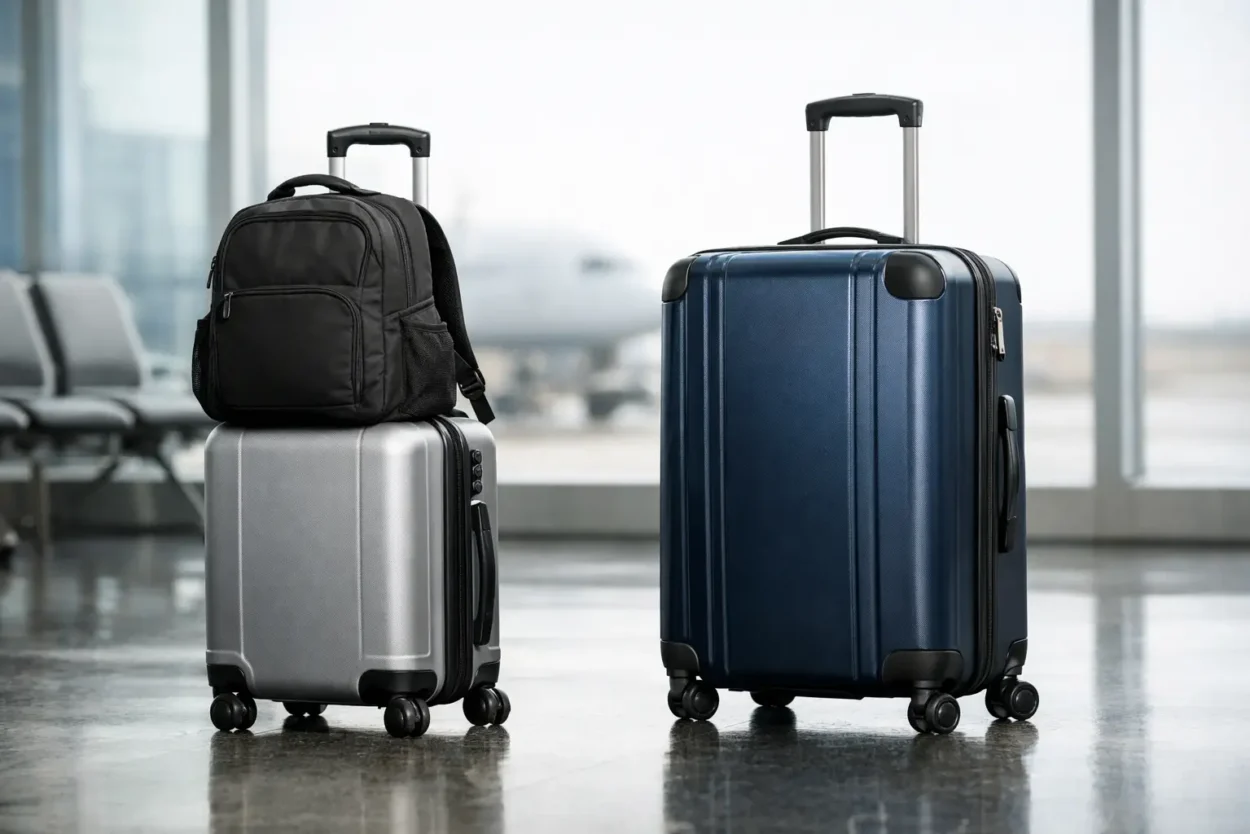
A carry-on bag travels with you in the cabin, either in the overhead bin or under the seat in front of you. Most major US airlines allow one carry-on plus one personal item, though basic economy fares and smaller regional planes can come with tighter rules. Your personal item might be a backpack, tote, laptop bag, or roomy crossbody.
Checked luggage is handed over at the airline counter or bag-drop area before security and collected from baggage claim after landing. It gives you considerably more room, but it can add a fee, waiting time, and a small risk of delayed luggage.
The simplest distinction is this: carry-on luggage saves time, while checked luggage creates space. Your priorities decide which benefit matters more.
When a Carry-On Is the Better Choice
A carry-on is ideal when you want a faster, lower-stress airport experience. You can skip the bag-drop line, go straight to security, and leave the airport as soon as you land. That is especially helpful on short business trips, long weekend getaways, or flights with a tight connection.
It can also save money. Many airlines charge for checked bags, and those costs can add up quickly when you are traveling as a couple or family. If you can pack light, putting that money toward a nicer dinner, museum tickets, or a hotel upgrade is usually more rewarding.
Carry-on travel works best for trips of about one to five days, particularly in warm destinations where clothing takes up less room. A few mix-and-match outfits, comfortable walking shoes, pajamas, and a small toiletry bag are often enough. Rewearing jeans, jackets, and casual shoes makes packing far easier than most travelers expect.
There is another major advantage: your essentials stay with you. If a flight is delayed, rerouted, or moved to a different airport, you still have your medication, valuables, chargers, and a change of clothes. For destination weddings, cruises, or any trip with a fixed first-day event, that peace of mind can be valuable.
The Limits of Carry-On Travel
Packing light takes planning. The biggest hurdle is the TSA liquid rule: liquids, gels, creams, and aerosols in your carry-on generally need to be in containers of 3.4 ounces or less, placed in one quart-size bag. Full-size sunscreen, perfume, dry shampoo, and favorite skincare products may need to stay home, be bought after you land, or go into a checked bag.
Overhead-bin space can also be unpredictable. On full flights, airlines may gate-check carry-ons at the last minute. This is free, but it removes some of the control that makes carry-on travel appealing. Keep medications, electronics, travel documents, jewelry, and one useful layer in your personal item in case your roller bag is taken at the gate.
Be realistic about your suitcase, too. Airline size limits vary, and a bag that fits one carrier may be too large for another. Soft-sided bags can be more forgiving than hard-shell cases, but neither is guaranteed to fit on a smaller aircraft.
When Checked Luggage Makes More Sense
Checked luggage is often the practical choice for longer trips, special occasions, and travel that involves gear. A larger suitcase lets you pack comfortably instead of treating every item like a puzzle piece.
It is particularly useful for cold-weather vacations. Coats, sweaters, snow boots, scarves, and thicker pants take up serious space. The same goes for beach trips with family gear, road-trip extras, formalwear, hiking equipment, and souvenirs you cannot easily fit into a cabin bag.
A checked bag also makes sense if you prefer full-size toiletries or need to transport items that are restricted in carry-ons. That might include larger liquid products, certain beauty tools, or sports equipment. Travelers who use specialty hair products, need extra medical supplies, or are packing for children may find that a carry-on-only approach is more frustrating than freeing.
For trips longer than a week, checking a bag can give you more flexibility with clothing. You can pack a variety of options without spending vacation time hunting for laundry facilities or doing sink laundry in a hotel bathroom. That does not mean bringing your whole closet. It means choosing enough room to travel comfortably.
The Trade-Offs of Checking a Bag
The obvious downside is cost. Airline baggage fees vary by route, fare type, loyalty status, and credit card benefits, so check your airline’s current policy before you book. A low-cost ticket can become less of a bargain once baggage fees are added.
You will also need to arrive earlier, drop your bag, and wait at baggage claim after the flight. On a short trip, those extra steps may feel like a waste of valuable time. If you are landing late at night or racing to catch a train, ride, or connection, a checked bag can slow things down.
Lost luggage is uncommon, but delayed bags do happen. Put a luggage tag on the outside and place your contact details inside the suitcase as well. Avoid checking irreplaceable items, including passports, medication, cameras, laptops, cash, and sentimental jewelry. A small tracker can also help you see whether your bag made it onto the plane, though it cannot prevent a delay.
How to Choose for Your Specific Trip
Start with your itinerary, not the size of your suitcase. A three-day city break with casual plans calls for a very different packing strategy than a ten-day ski vacation or a destination wedding.
Think about the weather first. Warm climates make carry-on packing easier, while cold or changeable forecasts often favor checked baggage. Next, consider your accommodations. If you are staying somewhere with laundry access, you can pack less. If you are moving between several hotels, trains, and airports, a lighter carry-on may make the trip much more enjoyable.
Your flight schedule matters too. For a short connection, keeping your bag with you can reduce the chance of it missing a transfer. But if you are flying a small regional route where gate-checking is likely, pack your personal item carefully so you are prepared either way.
Finally, factor in your personal travel style. Some people love a capsule wardrobe and feel calmer with one small bag. Others value choices, full-size beauty products, and the comfort of knowing they are prepared for every plan. Neither approach is wrong. The goal is to avoid bringing items that add weight without adding value to your trip.
A Smart Middle Ground: Check One, Carry One
For many travelers, the best answer is not strictly carry-on or checked luggage. It is both. Check a larger suitcase for clothing and liquids, then bring a personal item or small cabin bag with everything you would need for the first 24 hours.
Your cabin bag should hold identification, medication, chargers, valuables, a reusable water bottle, headphones, and a simple change of clothes. Add a toothbrush, travel-size face wash, and clean underwear if your checked bag is delayed. This backup plan is especially useful for international flights, family travel, and trips with an important event right after arrival.
If you are sharing a checked suitcase with a partner, split a few essentials between both bags rather than placing one person’s entire wardrobe in one case. If one bag is delayed, neither of you will be left with nothing to wear.
Pack for the Trip You Want to Have
Choose carry-on luggage when speed, flexibility, and saving on fees are your top priorities. Choose checked luggage when space, comfort, and packing for specific needs matter more. Before each trip, check your airline’s baggage rules, measure your bag, and build your packing list around your actual plans rather than every possible scenario.
The best luggage strategy should make your trip feel lighter from the moment you leave home. Pack what helps you enjoy the destination, and leave the “just in case” extras behind.