Learn the toner essence difference, when to use each product, and how to build a simple skincare routine for hydrated, balanced, glowing-looking skin.
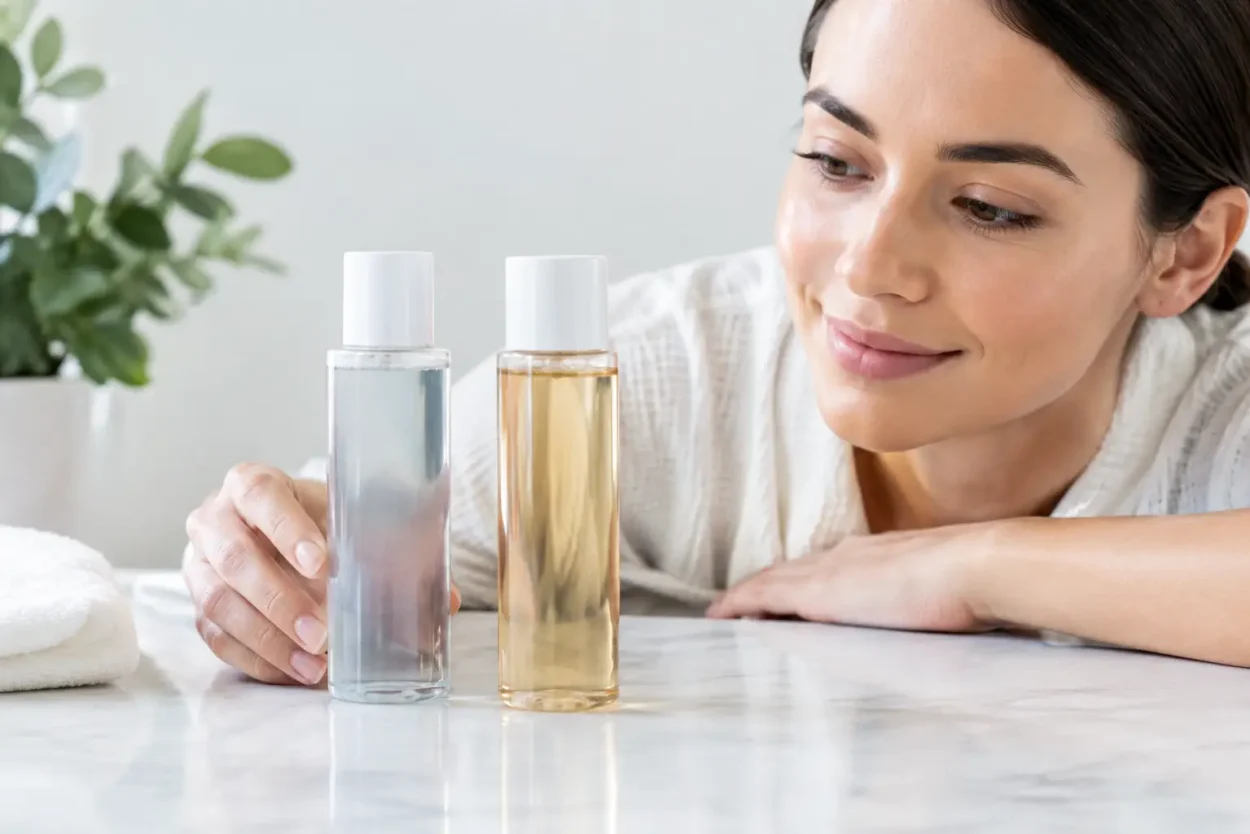
Toner Essence Difference Explained Simply
A toner and an essence can sit side by side on a bathroom shelf, look nearly identical, and still do very different jobs. Understanding the toner essence difference makes it much easier to buy what your skin actually needs instead of adding another pretty bottle to an already crowded routine.
The short version: toner usually helps refresh, balance, or lightly exfoliate skin after cleansing. Essence is usually a lightweight treatment step made to add hydration and support a healthy-looking skin barrier. Some formulas overlap, especially in modern skincare, so the label alone does not tell the whole story. Ingredients and your skin goals matter more.
What Is Toner?
Toner is applied after cleanser, usually with clean hands or a reusable cotton pad. Older toners were often alcohol-heavy and designed to remove leftover makeup, oil, and cleanser. That approach can leave skin feeling tight, especially if you have dry or sensitive skin.
Today, toner comes in many forms. Hydrating toners use ingredients such as glycerin, hyaluronic acid, aloe, and panthenol to leave skin softer and more comfortable. Exfoliating toners may contain salicylic acid, glycolic acid, lactic acid, or polyhydroxy acids to help with clogged pores, uneven texture, and dullness. Some toners include calming ingredients like centella asiatica, green tea, or niacinamide.
Think of toner as a flexible supporting step. Depending on the formula, it can give your skin a quick drink of moisture, target excess oil, or provide gentle exfoliation. It is not a must-have for everyone, but the right one can make a routine feel more tailored.
Who May Like a Toner?
A hydrating toner can be useful for skin that feels dry or tight after cleansing. An exfoliating toner may suit people dealing with blackheads, breakouts, or rough patches, though it should be used carefully. If you are sensitive, easily irritated, or already using prescription acne treatments or retinoids, a mild hydrating formula is often the safer starting point.
What Is an Essence?
Essence is a lightweight, usually water-based skincare product that goes on after cleansing and before serum or moisturizer. It is designed to deliver hydration and beneficial ingredients without the heavier feel of a cream.
Many essences feature humectants, which attract water to the skin. You might also see fermented ingredients, rice extract, snail mucin, peptides, beta-glucan, or soothing botanical extracts. The goal is often plumper, smoother-looking skin with a comfortable, dewy finish.
Essence is especially popular in multi-step Korean skincare routines, but you do not need a 10-step routine to enjoy one. A single well-chosen essence can be a simple way to add hydration, particularly if your skin looks dehydrated but you do not want to layer on a rich product.
Who May Like an Essence?
Essence can work well for normal, dry, dehydrated, or sensitive skin, although every formula is different. It is also a nice option for combination skin because it adds moisture with a light texture. If your skin often looks dull or makeup clings to dry areas, a hydrating essence may help your complexion look smoother under foundation.
The Toner Essence Difference at a Glance
The clearest toner essence difference is their usual purpose. Toner tends to focus on refreshing, balancing, soothing, or exfoliating after cleansing. Essence tends to focus on hydration and treatment support before serums and moisturizer.
Their texture can offer a clue, too. Toners are often watery, although some are slightly milky or gel-like. Essences are commonly a little more viscous than water but lighter than a serum. Still, texture is not a rule. A hydrating toner may feel almost identical to an essence, while a watery essence can feel like a toner.
The ingredient list is more useful than the product category. A toner with glycerin and panthenol may function much like a hydrating essence. An essence with niacinamide and brightening extracts may deliver benefits similar to a lightweight serum. Skincare marketing is not always perfectly neat, so focus on what the product is made to do for your skin.
Do You Need Both in Your Routine?
No. Plenty of effective routines use neither toner nor essence. Cleanser, moisturizer, sunscreen, and a treatment product that fits your goals are the real foundation. Toner and essence are optional extras that can make a routine more comfortable or more targeted.
You may want both if you use them for distinct reasons. For example, someone with oily but dehydrated skin might use a gentle salicylic acid toner two or three nights a week for clogged pores, then follow with a hydrating essence to reduce that stripped feeling. Someone with dry skin may use a soothing toner and an essence, but a good moisturizer could provide much of the same benefit with fewer steps.
More products do not automatically mean better skin. Layering too many actives can lead to stinging, flakes, redness, or breakouts. If your routine is already working, there is no need to add a toner or essence simply because it is trending.
How to Choose the Right One for Your Skin
Start with the concern you want to address. If you want extra hydration, look for a toner or essence with glycerin, hyaluronic acid, beta-glucan, ceramides, or panthenol. For a calmer feel, consider formulas with oat, centella asiatica, or aloe.
If clogged pores and breakouts are your main concern, a toner with salicylic acid can be helpful. Start slowly, especially if you are new to acids. Using it two or three times per week is often enough at first. Avoid combining it in the same routine with several other strong exfoliants unless your skin has already tolerated that combination.
For a more even-looking tone, niacinamide, licorice root extract, vitamin C derivatives, and gentle exfoliating acids can be useful. Results take time, and sunscreen matters every day. Brightening products cannot do much if fresh sun exposure keeps triggering discoloration.
Fragrance is another personal factor. A scented formula can make skincare feel luxurious, but fragrance may bother reactive skin. If you have eczema, rosacea, frequent irritation, or a damaged skin barrier, fragrance-free and alcohol-free options are usually easier to work with.
Where Toner and Essence Fit in Your Routine
After cleansing, apply toner first if you are using one. Then press essence into slightly damp skin with your palms. Follow with serum, moisturizer, and sunscreen in the morning.
At night, the order is similar: cleanse, toner, essence, serum or treatment, then moisturizer. If your toner is exfoliating, you may not need another active serum that evening. Let your skin guide you. A little tingling can happen with some active ingredients, but burning, persistent redness, or peeling is a sign to stop and simplify.
You also do not need to wait for each layer to dry completely. Apply your next hydrating layer while the skin still feels lightly damp, then seal it in with moisturizer. This helps reduce water loss and can leave skin looking bouncier by morning.
A Simple Way to Start
If you are choosing between the two, begin with one product, not both. Choose a hydrating essence if your skin feels thirsty, tight, or dull. Choose a toner if you have a clear need for gentle exfoliation, oil control, or post-cleanse soothing.
Use the product for at least a couple of weeks before deciding whether it earns a permanent place on your shelf. The best routine is not the one with the most steps. It is the one you can enjoy, afford, and use consistently while your skin feels calm and comfortable.