Learn how to style a blazer with jeans, dresses, trousers, and more. Easy outfit ideas to make one wardrobe staple look polished and current.
How to Style a Blazer for Every Outfit
A blazer can fix that annoying outfit problem where everything you own feels either too casual or too dressed up. That is exactly why learning how to style a blazer is worth it. One piece can make leggings look intentional, denim feel sharper, and a simple dress look like you planned the whole outfit.
The trick is not treating a blazer like office-only clothing. Right now, the best blazer outfits feel relaxed, balanced, and wearable in real life. You are not trying to look stiff. You are trying to look pulled together without much effort.
How to style a blazer without looking too formal
The easiest way to make a blazer feel modern is to pair it with pieces that naturally soften it. Think T-shirts, tank tops, straight-leg jeans, sneakers, knit dresses, or even shorts. The contrast is what makes the outfit work.
Fit matters more than almost anything else. An oversized blazer gives off a cool, easy look, especially with slim or straight bottoms underneath. A fitted blazer looks cleaner and more traditional, which can be great if you want polish, but it can also feel dressier faster. Neither is wrong. It depends on whether you want your outfit to read relaxed, sharp, or somewhere in between.
Fabric changes the mood too. A structured wool blazer feels smarter than a soft knit or linen version. If you want maximum versatility, a medium-weight blazer in black, navy, beige, gray, or camel will usually earn its place in your closet faster than a bold trend color. That said, if your wardrobe is mostly basics, a blazer in olive, burgundy, or a subtle plaid can add personality without becoming hard to style.
Start with the shape of the outfit
Before you think about shoes or accessories, look at proportions. A blazer adds volume to your upper half, so balance matters.
If your blazer is oversized, it usually looks best with cleaner lines underneath, like a fitted tank and straight jeans, a slip skirt, or slim trousers. If your blazer is cropped or tailored, you have more room to play with wider pants or fuller skirts. This is where a lot of outfits go wrong. The pieces are individually nice, but the shapes compete instead of complementing each other.
Length is another detail that changes everything. A blazer that hits around the hip tends to be the most flexible. Longer blazers can look very chic with leggings, slim pants, or bike shorts, but they may overwhelm petite frames if everything underneath is loose too. Shorter blazers work especially well with high-waisted pants and dresses because they define the waist more clearly.
The easiest blazer color choices
If you are building outfits around one blazer, black is the obvious workhorse. It is sleek, easy, and works from day to night. Beige and camel feel lighter and a little more fashion-forward, especially in spring and early fall. Navy is underrated because it gives the same polish as black but can feel softer with denim. Gray is great if your closet leans cool-toned and minimal.
If you already own one neutral blazer, that is when a check pattern, pinstripe, or richer color becomes useful. It gives simple outfits more interest without requiring a full style overhaul.
Blazer outfit ideas that actually work
One of the best things about a blazer is how little it asks from the rest of your outfit. You can build around basics you already wear.
With jeans
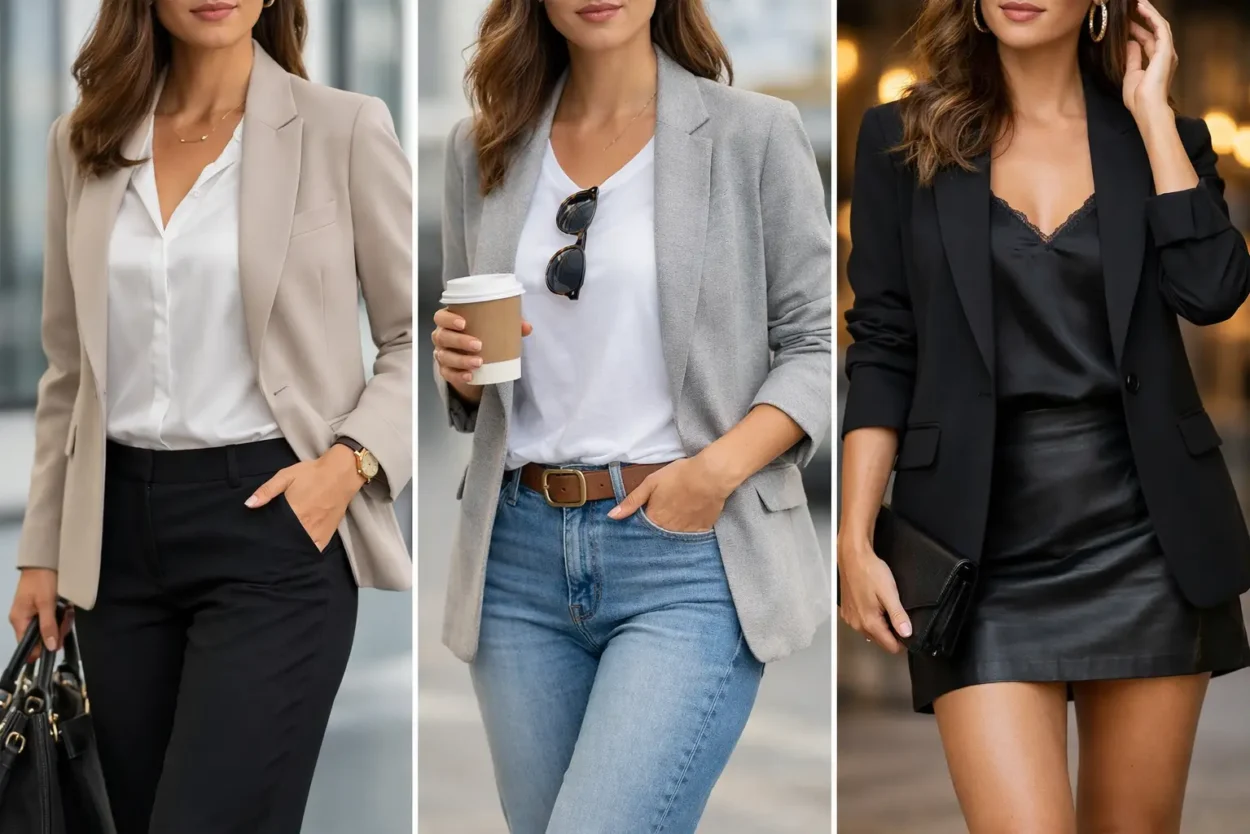
This is the most reliable place to start. A blazer, jeans, and a simple top almost always work because the denim keeps the look grounded. Straight-leg and relaxed jeans are especially good here because they feel current without trying too hard.
A white T-shirt with blue jeans and a black or camel blazer is clean and timeless. Switch the tee for a ribbed tank and add loafers or ankle boots if you want something a bit sharper. For a more casual version, keep the blazer slightly oversized and finish with white sneakers. If your jeans are very distressed, the outfit will lean casual no matter how polished the blazer is, which may be exactly what you want.
With trousers
This is the polished option, but it does not have to feel corporate. Matching blazer-and-trouser sets are popular because they remove the guesswork. A tank, bodysuit, or even a plain crewneck tee underneath keeps the look fresh.
If you are mixing separates, pay attention to texture. A smooth tailored blazer with relaxed wide-leg trousers can look great, but if both pieces are very stiff, the outfit may feel too formal for everyday wear. Breaking it up with casual shoes or softer knits helps.
With a dress
A blazer over a dress is one of the easiest ways to make a lighter piece feel more versatile. Slip dresses, knit dresses, and simple midi dresses all work well because the blazer adds structure.
This pairing is especially useful when the dress feels a little too bare for dinner, the office, or transitional weather. A boxy blazer over a fitted dress creates nice contrast. A cropped blazer over a flowy midi can work too, especially if you want more waist definition. Just be careful with very bulky blazers over dresses with lots of volume, since the outfit can start to feel heavy.
With shorts
This combination looks polished but still easy, especially in warmer months. Tailored shorts with a blazer can feel refined, while denim shorts make the look more off-duty. A tank or fitted tee underneath usually keeps the proportions clean.
Shoes make a big difference here. Sneakers keep it casual. Strappy sandals dress it up. Loafers can make it look more editorial, but the rest of the outfit should stay simple so it does not feel overdone.
With leggings or bike shorts
This is where blazer styling becomes genuinely practical. A long blazer over leggings, a fitted top, and sleek sneakers creates an elevated errand outfit that still feels comfortable. The same idea works with bike shorts if you like a sporty look.
The key is keeping the rest of the outfit streamlined. If the blazer is oversized and the bottoms are casual, clean accessories help the whole thing feel intentional rather than thrown together.
Shoes can change the entire outfit
If you ever feel stuck on how to style a blazer, start with the shoes you want to wear. They usually decide the outfit mood faster than the blazer does.
Sneakers make a blazer feel relaxed and wearable for daytime. Loafers and ballet flats add polish without pushing the outfit into full dressy territory. Ankle boots bring structure, especially with jeans or mini dresses. Heels instantly make a blazer look more elevated, which is useful for dinner, events, or evenings out.
There is no single correct choice here. It depends on where you are going and how dressed you want to feel. The better question is whether the shoes support the balance of the outfit. A very tailored blazer with athletic sneakers can look cool if the rest of the outfit is simple and modern. The same sneakers with formal trousers and a silky blouse may feel visually mixed in a less intentional way.
Small styling details make a big difference
A blazer can look completely different based on how you wear it. Rolled sleeves make it feel more casual. Wearing it open creates a relaxed line, while buttoning it gives more shape and structure. Pushing the sleeves up also helps if the outfit starts to feel too serious.
What you wear underneath matters just as much. A crisp button-down gives you classic polish. A tank top feels current and minimal. A graphic tee makes the blazer look younger and more casual. In colder weather, a fine knit or lightweight turtleneck turns the blazer into a smart layering piece without adding bulk.
Accessories should support the look, not compete with it. A simple belt, clean handbag, or gold jewelry is often enough. If your blazer has a pattern or strong shoulder shape, let that be the standout element.
Common mistakes to avoid
The biggest mistake is forcing a blazer into an outfit that already feels too structured. If your pants are tailored, your blouse is formal, and your shoes are polished, the blazer may push everything too far unless that is the goal.
Another common issue is poor sleeve or shoulder fit. Even an oversized blazer should look intentional, not like it slipped off a different hanger. The shoulder line especially changes how expensive and flattering a blazer looks.
Finally, do not ignore comfort. If you are constantly tugging at the sleeves, overheating, or feeling boxed in, you probably will not wear it often. A blazer should make getting dressed easier, not more complicated.
The best blazer outfits usually come from mixing polish with ease. Start with one blazer you love, pair it with clothes you already reach for, and adjust the styling based on the day. Once it clicks, it becomes one of those rare wardrobe pieces that makes almost everything else look better.