Learn how to make fluffy pancakes with simple ingredients, easy mixing tips, and foolproof cooking steps for a soft, airy breakfast every time.
How to Make Fluffy Pancakes at Home
Flat, rubbery pancakes can ruin the whole breakfast mood. If you want to know how to make fluffy pancakes, the good news is that it usually comes down to a few small fixes – not a complicated recipe, not fancy tools, and definitely not chef-level skills.
The secret is a mix of ingredients, technique, and timing. Pancakes get their lift from leavening, but they stay soft because the batter is handled gently and cooked at the right temperature. Once you understand that balance, fluffy pancakes stop feeling hit-or-miss.
How to Make Fluffy Pancakes: What Actually Matters
A fluffy pancake is light in the middle, tender around the edges, and golden on the outside without being dry. That texture comes from air bubbles created by baking powder, sometimes baking soda, and the way the batter traps them. If you overmix or let the batter sit too long, those bubbles fade before the pancakes ever hit the pan.
Ingredient temperature also plays a role. Room-temperature milk and eggs mix more smoothly into the batter, which helps you avoid overworking it. That said, if your ingredients are cold, you can still make great pancakes. You just want to stir less and give the batter a minute or two to come together naturally.
A Simple Fluffy Pancake Recipe
This version is easy enough for a weekday and reliable enough for a relaxed weekend breakfast.
Ingredients
You will need 1 1/2 cups all-purpose flour, 3 1/2 teaspoons baking powder, 1 tablespoon sugar, 1/2 teaspoon salt, 1 1/4 cups milk, 1 egg, 3 tablespoons melted butter, and 1 teaspoon vanilla extract if you want a little extra flavor.
If you like a slightly richer pancake, use whole milk. If you want something lighter, 2% milk still works well. You can also swap in buttermilk, but the texture and flavor will be a little tangier and a bit more delicate.
Method
Start by whisking the flour, baking powder, sugar, and salt in a large bowl. In a separate bowl or measuring cup, whisk the milk, egg, melted butter, and vanilla.
Pour the wet ingredients into the dry ingredients and stir just until combined. The batter should look a little lumpy. That is a good sign. Smooth batter sounds appealing, but it usually means the flour has been overmixed, which leads to tougher pancakes.
Let the batter rest for 5 minutes while you heat your skillet or griddle over medium heat. Lightly grease the surface with butter or oil. Scoop about 1/4 cup of batter per pancake onto the pan.
Cook until bubbles form on the surface and the edges start to look set, usually about 2 to 3 minutes. Flip once and cook for another 1 to 2 minutes until golden and cooked through. Serve right away while they are warm and soft.
The Biggest Mistakes That Keep Pancakes From Getting Fluffy
Most pancake problems are surprisingly fixable. If your pancakes turn out dense, the batter was probably mixed too much or the pan was too hot. High heat can brown the outside before the inside has time to rise properly.
Old baking powder is another common issue. If it has been sitting in the pantry for a long time, it may not give your pancakes enough lift. Fresh baking powder makes a real difference here.
Using too much batter can also work against you. Thick pancakes sound like they should be fluffier, but if they are too large or too deep, they may cook unevenly and end up heavy in the center. A moderate scoop gives you better height and a softer crumb.
Tips for Extra Fluffy Pancakes
Don’t overmix the batter
This is the number one rule. Stir until you no longer see dry streaks of flour, then stop. Small lumps are completely fine. In fact, they are often the reason the finished pancakes stay tender.
Let the batter rest briefly
A short rest gives the flour time to hydrate and the leavening time to start working. Five minutes is enough. Much longer than that, and you can lose some of the rise.
Use medium heat, not high
Medium heat gives the batter time to puff up before the outside gets too dark. If your pancakes are browning in under a minute, the pan is too hot.
Flip once
It is tempting to keep checking or pressing them down with the spatula, but that works against the fluffy texture you are trying to build. Let the first side cook undisturbed, then flip once and finish.
Measure carefully
Too much flour can make pancakes thick and dry rather than airy. If possible, spoon the flour into the measuring cup and level it off instead of scooping directly from the bag.
Ingredient Swaps and What to Expect
One reason pancake recipes are so popular is that they are flexible. Still, every swap comes with a trade-off.
If you use buttermilk instead of regular milk, the pancakes will have a pleasant tang and a very tender texture. You may want to add 1/2 teaspoon baking soda along with slightly less baking powder to balance the acidity.
If you use whole wheat flour, expect a heartier pancake. You can replace part of the all-purpose flour without losing too much fluffiness, but using all whole wheat flour usually makes the texture denser.
If you want dairy-free pancakes, plant-based milk and melted coconut oil or another neutral oil can work. The pancakes may be slightly less rich, but they can still turn out soft if you keep the batter light and avoid overmixing.
You can even separate the egg, whip the white, and fold it in at the end for extra lift. That method creates a taller, airier pancake, but it also adds an extra step. For most home cooks, standard mixing gets the job done just fine.
How to Know When the Pan Is Ready
This part matters more than people think. If the pan is not hot enough, the batter spreads too much before it starts cooking. If it is too hot, the outside burns before the center sets.
A simple test is to flick a tiny drop of water onto the skillet. If it sizzles gently and disappears, the pan is ready. If it vanishes instantly with an aggressive hiss, lower the heat and wait a minute.
Butter gives great flavor, but it can brown quickly. If you are making several batches, a neutral oil or a mix of oil and butter is often easier to manage.
Topping Ideas That Work With Fluffy Pancakes
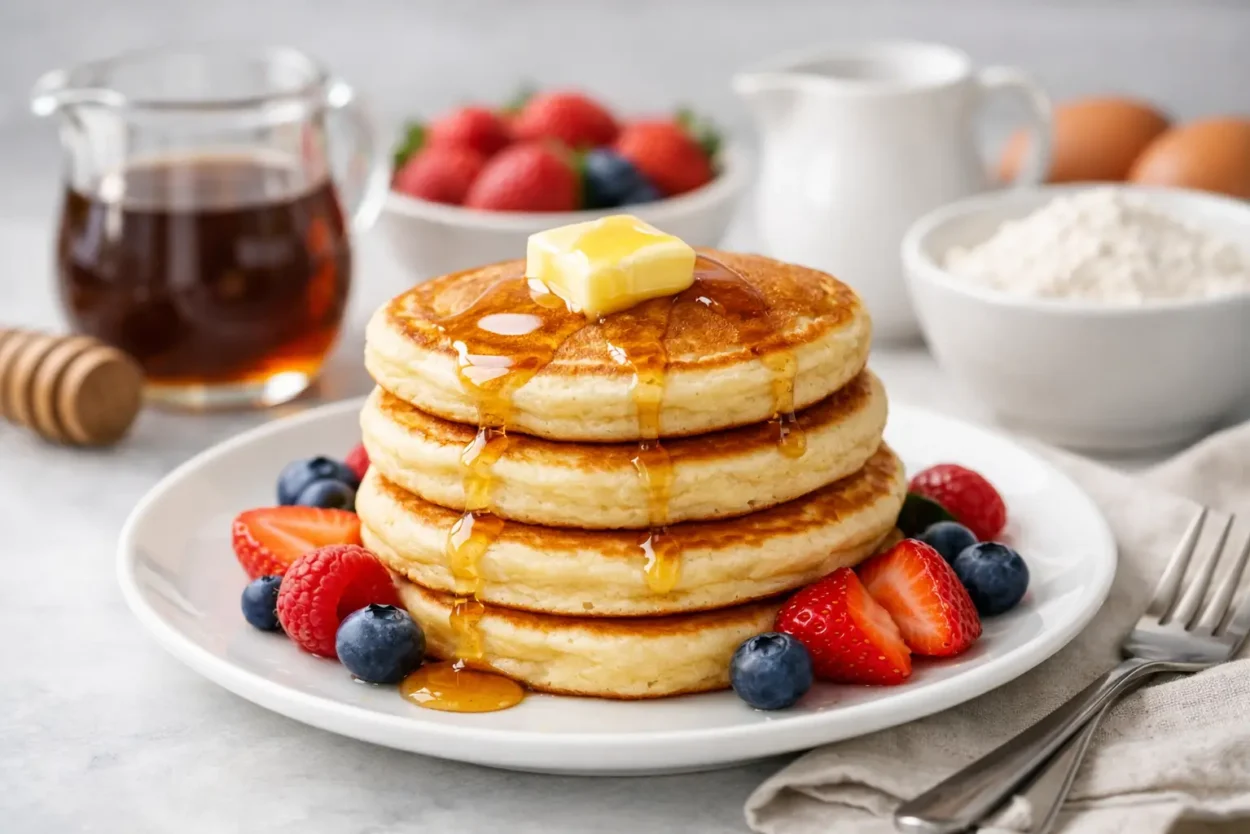
Once you have the texture right, you can keep the toppings classic or make breakfast feel a little more special. Maple syrup and butter always work. Fresh berries, sliced bananas, whipped cream, and a dusting of powdered sugar all pair beautifully with soft pancakes.
If you like a cozier breakfast, try cinnamon apples or warm strawberry sauce. Chocolate chips are popular too, but stir them into the batter sparingly. Too many add-ins can weigh the pancakes down and make them harder to cook evenly.
Storing and Reheating Leftover Pancakes
Fluffy pancakes are best fresh, but leftovers are still worth saving. Let them cool completely, then store them in an airtight container in the fridge for up to 3 days. You can also freeze them with small pieces of parchment paper between each pancake so they do not stick together.
To reheat, use a toaster, skillet, or low oven. The microwave works in a pinch, but it can make pancakes a little chewy if you heat them too long. For the best texture, warm them gently and serve as soon as they are heated through.
If Your Pancakes Still Aren’t Fluffy
If you have tried once and the result was disappointing, don’t write off the recipe too quickly. Pancakes are one of those simple foods where little details matter. A cooler pan, fresher baking powder, or one less stir can completely change the result.
That is why learning how to make fluffy pancakes is less about memorizing one perfect formula and more about noticing what the batter looks like and how the pan behaves. Once you get that feel for it, breakfast becomes much easier – and a lot more satisfying.
Next time you mix up a batch, keep it simple, keep it gentle, and let the pancakes do their thing. A stack of soft, airy pancakes is closer than it looks.